
 Ekani Ella
 On a chilly evening, few things are more comforting than a proper Mary Berry Chicken and Leek Casserole. This dish delivers tender chicken thighs in a creamy, savory sauce that’s rich with leeks, herbs, and a touch of mustard. It’s a classic British braise that feels both special and deeply satisfying.
The total time is just over an hour and a half, with most of it hands-off in the oven. I’d call this an intermediate recipe. The steps are simple, but getting a good sear on the chicken and building the sauce properly are key skills. Don’t worry—I’ll walk you through it all.
What Is Mary Berry’s Chicken and Leek Casserole?
This is a quintessential British comfort food dish. It belongs to the family of one-pot meals where meat and vegetables are slowly braised together. The result is a deeply flavorful, velvety stew.
What sets this version apart is the combination of two mustards and a splash of white wine. They cut through the richness of the cream, creating a more complex sauce than a standard chicken stew. The leeks become sweet and soft, forming the backbone of the dish’s flavor.
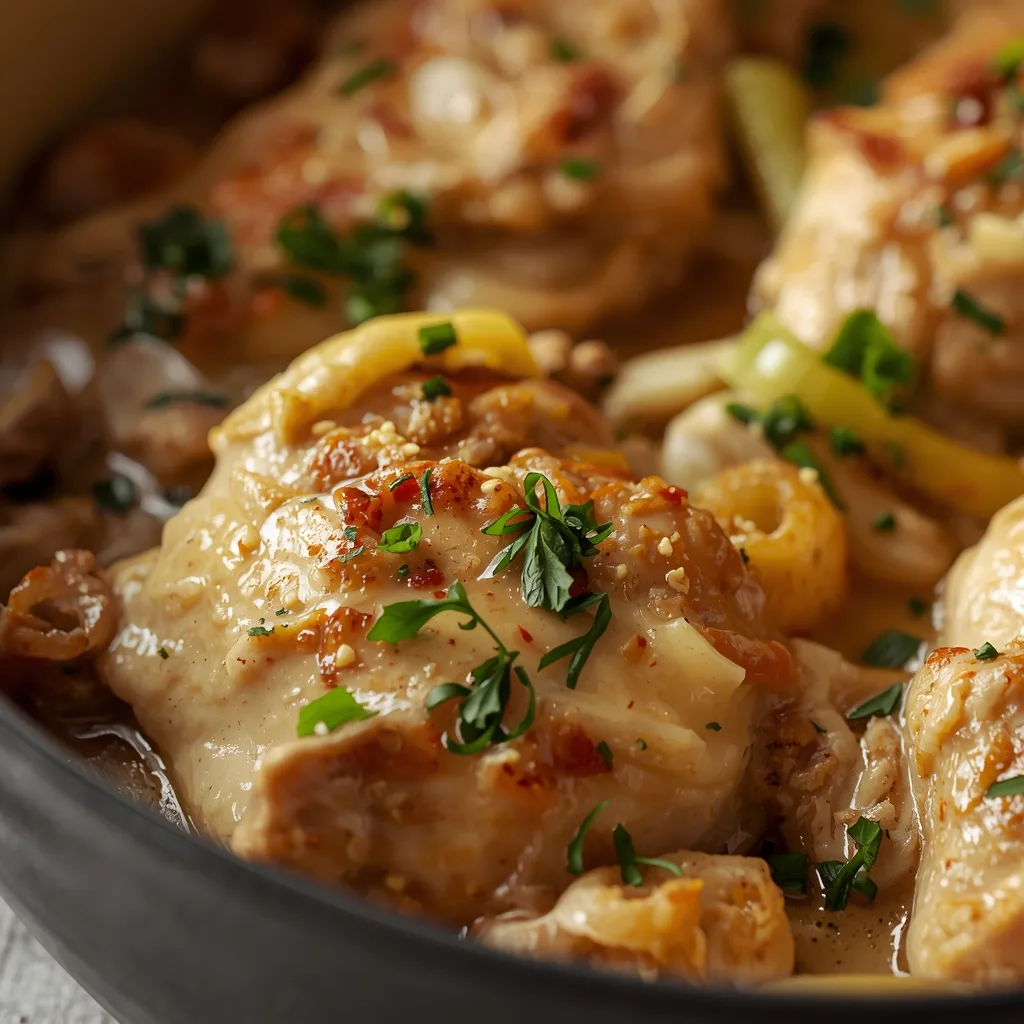
Gather These Fresh Ingredients for Mary Berry Chicken and Leek Casserole
Quality ingredients make a real difference here. Here’s what you’ll need, broken down by their role.
The Chicken & Seasoning
- 2 lb bone-in, skin-on chicken thighs — This cut stays juicy during the long cook. The skin provides essential flavor and crispness when seared.
- 1 1/2 tsp kosher salt, divided — We season in two stages to build depth. Kosher salt is less salty by volume than table salt.
- 3/4 tsp freshly ground black pepper, divided — Freshly ground has a brighter, more aromatic flavor than pre-ground.
- 2 tbsp all-purpose flour — A light dredge helps the chicken brown beautifully and acts as a slight thickener for the sauce.
The Aromatics & Vegetables
- 3 medium leeks (white and light green parts only) — They must be cleaned thoroughly to remove hidden grit. Their sweet, onion-like flavor is central to the dish.
- 2 medium carrots, cut into rounds — They add a subtle sweetness and texture. Cutting them uniformly ensures even cooking.
- 2 cloves garlic, minced — Provides a savory base note. Add it late to prevent burning.
- 1 tbsp fresh thyme & 2 tsp fresh rosemary — Fresh herbs are non-negotiable for their vibrant flavor. Dried herbs will taste dusty in comparison.
The Sauce Builders
- 2 tbsp unsalted butter & 1 tbsp olive oil — The butter adds flavor for browning, while the oil raises the smoke point to prevent burning.
- 3/4 cup dry white wine (like Sauvignon Blanc) — It deglazes the pot, lifting all the flavorful browned bits. The alcohol cooks off, leaving behind acidity.
- 1 1/2 cups low-sodium chicken stock — Using low-sodium lets you control the final salt level of the sauce.
- 2 tbsp Dijon mustard & 1 tbsp whole-grain mustard — Dijon integrates smoothly for tang, while whole-grain adds pops of texture and a milder bite.
- 2/3 cup heavy cream — Added at the end to enrich and slightly thicken the sauce. Don’t boil it vigorously once added.
- 2 tbsp fresh parsley, chopped — A fresh garnish that adds color and a bright, clean finish.
Detailed Step-by-Step Instructions to Make Mary Berry Chicken and Leek Casserole
Follow these steps in order for the best results. I’ve included my own notes from years of testing.
- Prep and Season the Chicken — Pat the thighs completely dry. Any moisture will steam the skin instead of browning it. Season well, then dredge lightly in flour, shaking off the excess. A thin coat is all you need.
- Achieve a Deep Sear — Heat your Dutch oven over medium-high heat. Add the butter and oil. Once the butter’s foam subsides, add the chicken skin-side down. Don’t move it for a full 5-6 minutes. This patience is what creates that essential crispy, golden crust and flavorful fond in the pot.
- Clean and Slice the Veg — While the chicken browns, halve the leeks lengthwise and rinse under running water, fanning the layers to wash out all dirt. Slice them into half-moons. Peel and slice the carrots into even rounds.
- Soften the Aromatics — Reduce the heat to medium. Add the leeks and carrots to the pot. Cook them until the leeks are wilted and soft. This step builds a sweet foundation. Add the garlic and herbs last, cooking just until fragrant—about a minute.
- Deglaze and Build the Base — Pour in the white wine. Use a wooden spoon to scrape up every bit of the browned fond from the bottom. This is where huge amounts of flavor live. Let it bubble for a minute.
- Combine the Liquids and Mustard — Add the chicken stock, both mustards, and the remaining salt and pepper. Whisk it all together and let it simmer for 3 minutes. You’ll see the sauce start to come together.
- Braise in the Oven — Nestle the seared chicken back into the pot, skin-side up and above the liquid. Cover tightly and transfer to a preheated 350°F / 177°C oven. The gentle, even heat of the oven braise makes the chicken incredibly tender.
- Finish the Sauce — After 45 minutes, carefully remove the pot. Transfer the chicken to a plate. Stir the heavy cream into the sauce on the stovetop over medium heat. Let it simmer for 5-7 minutes until it thickens just enough to coat a spoon.
- Rest and Garnish — Return the chicken to the sauce. Let everything sit off the heat for 5 minutes. This allows the meat to relax and reabsorb juices. Sprinkle with fresh parsley just before serving.
Common Mistakes and How I Fixed Them
I’ve made my share of errors with this dish over the years. Here’s what I learned the hard way.
- Soggy Chicken Skin — I once didn’t pat the thighs dry enough. The moisture created steam, so the skin never got properly crisp. Now, I use paper towels and press firmly to remove every bit of surface moisture.
- Burned Garlic — Adding minced garlic too early with the leeks caused it to burn and turn bitter during their longer cook time. I now add it in the last minute of sautéing the vegetables.
- A Thin, Watery Sauce — Rushing the final simmer after adding the cream was my mistake. The sauce needs a good 5-7 minutes of gentle bubbling to reduce and thicken to the right, velvety consistency.
- Gritty Leeks — I learned this lesson once and only once. Not cleaning leeks thoroughly leaves gritty dirt in the final dish. Slicing them lengthwise first and rinsing under cold water is the only sure method.
- Overcrowding the Pot — Trying to brown all the chicken at once lowers the pan temperature too much. The pieces steam instead of sear. I now work in two batches if my pot is on the smaller side.
- Skimping on the Fond — I used to deglaze too quickly, not scraping the pot’s bottom thoroughly. Those dark, sticky bits are pure flavor. Take your time with the wooden spoon to get them all up.
What Pairs Perfectly with This Hearty Casserole
The rich, creamy sauce demands something to soak it up. These are my favorite accompaniments.
- Creamy Mashed Potatoes — This is the classic, unbeatable pairing. The fluffy potatoes are the perfect vehicle for the mustard and herb-infused sauce.
- A Crusty Baguette — For a simpler option, a loaf of fresh, crusty bread is ideal for mopping up every last drop from your bowl.
- Buttered Egg Noodles — Their soft texture and mild flavor make them a wonderful, quick alternative to potatoes that still catches all the sauce.
- Steamed Green Beans — Their crisp-tender texture and slight bitterness provide a fresh, clean contrast to the rich, savory casserole.
- Buttery Peas — A handful of sweet peas stirred in at the end or served on the side adds a pop of color and sweetness.
- A Simple Green Salad — A salad with a sharp vinaigrette cuts through the richness of the dish and completes the meal.
Pro Tips for Making the Best Casserole
These small techniques will elevate your results from good to restaurant-quality.
- Use a Dutch Oven — Its heavy base ensures even heat distribution for browning and its tight lid is perfect for the oven braise. A cast-iron casserole dish works too.
- Season in Layers — Season the chicken before browning, and season the sauce again later. This builds a more complete, rounded flavor profile throughout the dish.
- Don’t Skip the Wine Reduction — After adding the wine, let it bubble and reduce by about half before adding the stock. This cooks off the raw alcohol taste and concentrates the flavor.
- Keep the Skin Crisp — When you return the chicken to the pot to braise, ensure the crispy skin stays above the liquid line. This prevents it from turning soggy during cooking.
- Rest Before Serving — Letting the finished dish sit for five minutes allows the chicken fibers to relax, ensuring each bite is succulent and tender.
- Taste for Seasoning at the End — After adding the cream, always taste the sauce. The dairy can mellow flavors, so you may need another small pinch of salt or pepper.
- Fresh Herbs Are Key — Dried thyme and rosemary can’t replicate the bright, aromatic punch of fresh. They are worth seeking out for this recipe.
Inspiring Variations of the Classic Recipe
Once you’ve mastered the original, try these simple twists to keep it interesting.
- Add Mushrooms — Sauté 8 ounces of sliced cremini mushrooms with the leeks. They add a wonderful earthy, umami depth to the sauce.
- Try Tarragon — Swap the thyme and rosemary for two tablespoons of fresh chopped tarragon. Its slight anise flavor is classic with chicken and cream sauces.
- Make it with Pork — Use bone-in pork chops instead of chicken thighs. Adjust the braising time down to 30-35 minutes to prevent overcooking.
- Add a Parmesan Rind — Toss a piece of Parmigiano-Reggiano rind into the pot before it goes in the oven. It will melt into the sauce, adding a rich, savory, cheesy note.
- For a Lighter Version — Replace the heavy cream with full-fat crème fraîche. It offers a similar richness with a pleasing tang.
- Root Vegetable Medley — Along with the carrots, add a diced parsnip or a turnip when cooking the leeks for a more rustic, hearty vegetable base.
How to Store Mary Berry Chicken and Leek Casserole Properly
This dish stores and reheats beautifully, often tasting even better the next day.
- Cool Completely Before Storing — Let the casserole come to room temperature on the counter. Putting hot food directly in the fridge can raise the internal temperature and risk spoilage.
- Refrigerate in an Airtight Container — Transfer the cooled casserole to a sealed container. It will keep safely in the fridge for up to 3 days.
- Freezing for Later — Portion the cooled casserole into freezer-safe containers or bags, leaving some headspace for expansion. It freezes well for up to 2 months.
- Label Everything — Always write the date on your containers. It’s easy to forget what’s in the freezer or how long it’s been in the fridge.
Smart Reheating Tips for Leftovers
Gentle reheating is crucial to maintain the texture of the chicken and the sauce.
- Stovetop Method — Gently reheat in a covered saucepan over low heat, stirring occasionally. Add a splash of chicken stock or cream if the sauce has thickened too much.
- Oven Reheating — Place leftovers in an ovenproof dish, cover with foil, and warm in a 300°F / 150°C oven for 20-25 minutes, until heated through to 165°F / 74°C internally.
- Microwave Carefully — Use a microwave-safe dish, cover loosely, and heat on medium power in 60-second intervals, stirring between each, to prevent the sauce from separating.
FAQs
Can I use chicken breasts instead of thighs?
You can, but I don’t recommend it. Chicken breasts lack the fat and connective tissue of thighs, so they tend to dry out during the long braising time. Thighs stay wonderfully juicy.
What can I use instead of white wine?
Replace the wine with an equal amount of additional low-sodium chicken stock. Add a tablespoon of fresh lemon juice at the end to mimic the acidity the wine provides.
How long does Mary Berry Chicken and Leek Casserole last in the fridge?
Properly stored in an airtight container, it will last for 3 days. The flavors continue to meld, making the leftovers taste fantastic.
Can I make this dish ahead of time?
Absolutely. You can complete the recipe through step 8 (finishing the sauce), then cool and refrigerate. Gently reheat the whole pot on the stovetop when ready to serve, adding a little extra liquid if needed.
Do I have to use the oven?
No. After combining everything in step 6, you can cover the pot and simmer it on the lowest stovetop setting for 45-50 minutes. Ensure it’s at a bare simmer, not a rolling boil.
Can I freeze Mary Berry Chicken and Leek Casserole?
Yes, it freezes very well for up to 2 months. Thaw it overnight in the refrigerator before reheating gently on the stovetop.
Nutritional Value
Based on one serving, which is roughly one-quarter of the total recipe.
- Calories: 612
- Protein: 38g
- Fat: 42g
- Carbohydrates: 18g
- Fiber: 3g
- Sugar: 6g
- Sodium: Around 980mg
Try These Recipes
- James Martin Game Pie
- River Cottage Game Pie
- Hairy Bikers Coleslaw with Mayonnaise
- Mary Berry Rhubarb Tart
Wrapping Up
This recipe is a true testament to the power of simple, slow cooking. The transformation of a few humble ingredients into something so deeply flavorful and comforting is what home cooking is all about.
I hope you feel confident to try this Mary Berry Chicken and Leek Casserole. It’s a dish that rewards a little patience with incredible taste. Let me know how it turns out for you.
PrintMary Berry Chicken and Leek Casserole

A comforting British casserole featuring tender chicken thighs braised in a creamy white wine and mustard sauce with sweet leeks and fresh herbs. The dish develops deep savory flavors through slow cooking, resulting in a rich, velvety texture perfect for chilly evenings.
- Prep Time: 25
- Cook Time: 75
- Total Time: 100
- Yield: 4 1x
- Category: Main Course
- Method: Stovetop and Oven
- Cuisine: British
Ingredients
- 2 lb bone-in, skin-on chicken thighs (4–6 pieces)
- 1 1/2 tsp kosher salt, divided
- 3/4 tsp freshly ground black pepper, divided
- 2 tbsp all-purpose flour
- 2 tbsp unsalted butter
- 1 tbsp olive oil
- 3 medium leeks (about 1 1/2 lb total), white and light green parts only
- 2 medium carrots, peeled and cut into 1/2-inch rounds
- 2 cloves garlic, minced
- 1 tbsp fresh thyme leaves, chopped
- 2 tsp fresh rosemary, finely chopped
- 3/4 cup dry white wine (such as Sauvignon Blanc)
- 1 1/2 cups low-sodium chicken stock
- 2 tbsp Dijon mustard
- 1 tbsp whole-grain mustard
- 2/3 cup heavy cream
- 2 tbsp fresh parsley, finely chopped
Instructions
- Prepare the chicken: Pat chicken thighs completely dry with paper towels. Season all sides evenly with 1 teaspoon kosher salt and 1/2 teaspoon black pepper. Place flour in a shallow dish and dredge each thigh lightly, shaking off excess flour. This creates a thin coating that will help brown the chicken and thicken the sauce later.
- Brown the chicken: Heat a large Dutch oven or heavy ovenproof pot over medium-high heat. Add butter and olive oil. When butter melts and foam subsides (about 1 minute), carefully add chicken thighs skin-side down. Cook undisturbed for 5-6 minutes until skin is deeply golden brown and crispy. Flip and cook 3-4 minutes on the other side. Transfer to a plate. The fond (browned bits) left in the pot is essential for flavor.
- Prepare vegetables: While chicken browns, thoroughly clean leeks by slicing lengthwise and rinsing under cold water to remove grit between layers. Slice crosswise into 1/2-inch half-moons. Cut carrots into uniform rounds to ensure even cooking.
- Cook aromatics: Reduce heat to medium. Add leeks and carrots to the pot. Cook, stirring occasionally, for 8-10 minutes until leeks are wilted and carrots begin to soften. Add garlic, thyme, and rosemary; cook 1 minute until fragrant. Deglaze with white wine, scraping the bottom with a wooden spoon to release all browned bits.
- Build the sauce: Add chicken stock, Dijon mustard, whole-grain mustard, remaining 1/2 teaspoon salt, and 1/4 teaspoon pepper. Whisk to combine. Bring to a simmer and cook for 3 minutes to slightly reduce and allow flavors to meld.
- Combine and braise: Nestle chicken thighs skin-side up into the vegetable mixture, ensuring skin remains above liquid to stay crisp. Pour any accumulated juices from the plate into the pot. Cover with a tight-fitting lid and transfer to preheated oven.
- Oven braise: Place covered pot in preheated 350°F / 177°C oven. Braise for 45 minutes. This gentle, even heat tenderizes the chicken while infusing it with the herb and vegetable flavors.
- Finish the sauce: Carefully remove pot from oven (handle will be hot). Transfer chicken to a clean plate. Place pot over medium heat on the stovetop. Stir in heavy cream and simmer for 5-7 minutes until sauce thickens slightly and coats the back of a spoon. Taste and adjust seasoning if needed.
- Rest and serve: Return chicken to the sauce, spooning some over the top. Let rest off heat for 5 minutes to allow chicken to reabsorb juices. Garnish with fresh parsley. Serve immediately with mashed potatoes or crusty bread to soak up the sauce.
Notes
Storage: Cool completely and refrigerate in an airtight container for up to 3 days. Freezing: Freeze in freezer-safe containers for up to 2 months. Thaw overnight in refrigerator before reheating. Reheating: Reheat gently in a covered saucepan over low heat, stirring occasionally, until heated through (165°F / 74°C internal temperature). Add a splash of chicken stock or cream if sauce has thickened too much. Oven alternative: If you prefer not to use the oven, after step 5, return chicken to pot, cover, and simmer on low heat on stovetop for 45-50 minutes, checking occasionally to ensure liquid is at a bare simmer.
Nutrition
- Calories: 612
- Sugar: 6g
- Sodium: 980mg
- Saturated Fat: 18g
- Carbohydrates: 18g
- Fiber: 3g
- Protein: 38g
- Cholesterol: 215mg
Keywords: Mary Berry chicken and leek casserole, chicken leek casserole, British casserole recipe, creamy chicken casserole, one-pot chicken dinner, weeknight family meal, mustard white wine sauce, braised chicken thighs, comfort food recipes, herb-infused chicken