 Ekani Ella
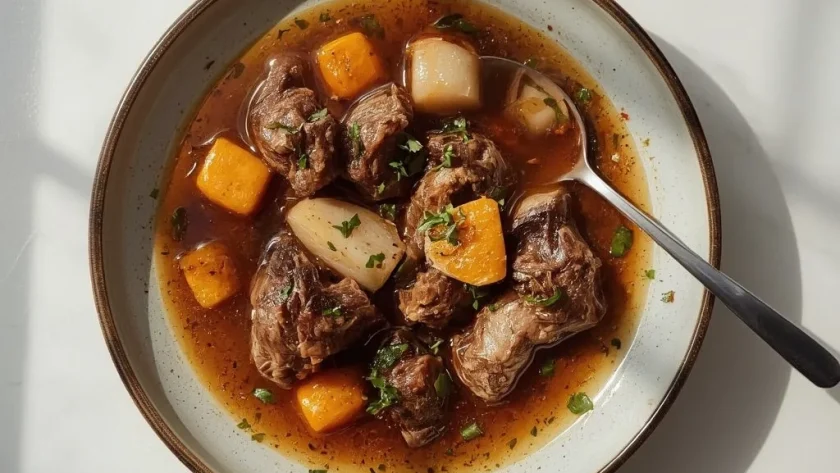
 Gordon Ramsay Lamb Stock is a deeply savory, gelatin-rich base that transforms stews, sauces, and braises into something special. The bones are roasted until dark and fragrant, then simmered gently for hours to extract maximum flavor and body.
This recipe takes about 5 hours and 20 minutes total and is best suited for intermediate home cooks. The trickiest part is maintaining a bare simmer without letting it boil, which keeps the stock clear and clean-tasting.
What Is Gordon Ramsay Lamb Stock?
This is a classic British stock made by roasting lamb bones and aromatic vegetables before a long, slow simmer. The technique focuses on deep caramelization and careful skimming for a crystal-clear result.
The finished stock has a rich, savory flavor with subtle herb notes from rosemary and thyme. It sets into a wobbly, jelly-like consistency when chilled, proof of the collagen extracted during cooking.
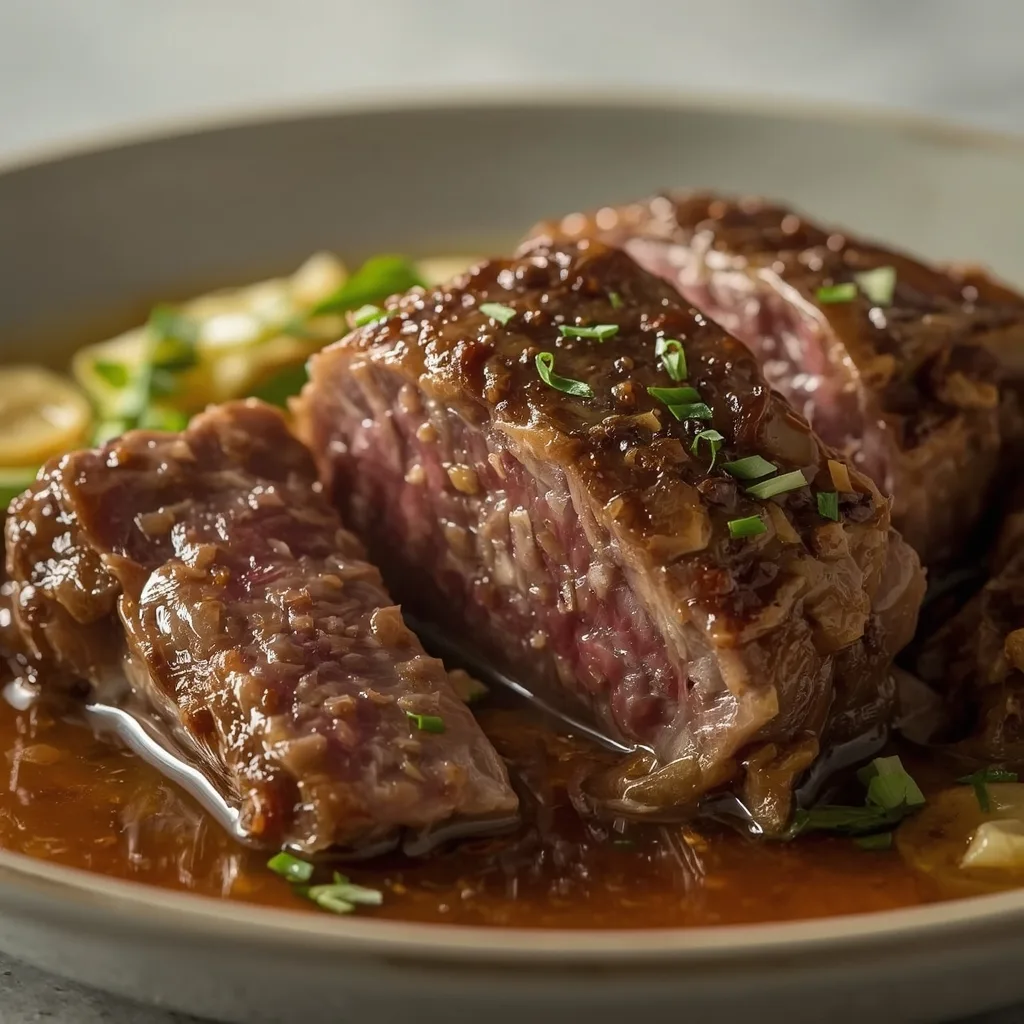
Gather These Fresh Ingredients for Gordon Ramsay Lamb Stock
Here is what you need to build this flavorful base.
Bones and Aromatics
- 3 lb lamb bones (knuckle, shank, or neck bones), cut into 3-inch pieces — These provide the gelatin and deep lamb flavor. Ask your butcher to cut them for you.
- 2 medium carrots, unpeeled, roughly chopped into 1-inch pieces — Unpeeled carrots add earthy sweetness and color. Leave the skins on for extra flavor.
- 2 medium celery stalks, roughly chopped into 1-inch pieces — Celery brings a subtle herbal note. Any celery variety works here.
- 1 medium onion, unpeeled, quartered — The skin adds a golden hue to the stock. Quartering exposes more surface area for browning.
- 1 head of garlic, halved crosswise — Halving exposes the cloves for deeper flavor. No need to peel.
Flavor Builders
- 2 tbsp tomato paste — This adds umami and deep color. Cook it in the pan after roasting to intensify its flavor.
- 1/2 cup dry white wine — A dry white wine like Sauvignon Blanc deglazes the pan and adds acidity. Skip sweet wines.
- 2 sprigs fresh rosemary — Fresh rosemary gives a piney, aromatic lift. Dried rosemary works too, but use half the amount.
- 3 sprigs fresh thyme — Thyme adds a gentle earthy note. Dried thyme can substitute at 1 teaspoon.
- 1 bay leaf — A single bay leaf weaves in subtle herbal depth. Turkish bay leaves are milder than California ones.
Liquids and Seasonings
- 8 cups cold water — Cold water helps extract collagen and minerals slowly. Never use hot water, which can cloud the stock.
- 1 tsp black peppercorns — Whole peppercorns infuse gentle heat without making the stock cloudy. Do not use ground pepper.
- 1 tsp kosher salt — Salt seasons the stock lightly. You can adjust later when using it in recipes.
- 2 tbsp apple cider vinegar — The vinegar helps pull nutrients and gelatin from the bones. It boils off during cooking, so no vinegar taste remains.
Detailed Step-by-Step Instructions to Make Gordon Ramsay Lamb Stock
The process is straightforward but requires patience. Here is how I walk through it.
- Roast the bones — Preheat your oven to 425°F (218°C). Arrange the lamb bones in a single layer in a large roasting pan. Drizzle with olive oil and toss to coat. Roast for 25-30 minutes, turning once halfway, until deeply browned and fragrant. This caramelization is critical for a deep, savory flavor and rich color.
- Roast the vegetables — Add the chopped carrots, celery, and quartered onion to the pan around the bones. Return to the oven for another 20 minutes, until the vegetables are softened and browned at the edges. The natural sugars in the vegetables caramelize, adding sweetness and complexity to the stock.
- Transfer to stockpot — Remove the pan from the oven and carefully transfer the roasted bones and vegetables to a large stockpot (at least 8-quart capacity). Set the roasting pan aside — do not wash it yet. The browned bits stuck to the bottom are pure flavor.
- Deglaze the pan — Place the roasting pan over two burners on your stovetop over medium heat. Add the tomato paste and stir constantly with a wooden spoon for 1-2 minutes, until it darkens and becomes fragrant. Pour in the white wine and deglaze the pan by scraping up all the browned bits (fond) with the wooden spoon. Let the wine simmer until reduced by half, about 2 minutes, then pour this sauce into the stockpot with the bones and vegetables.
- Add liquids and aromatics — Pour the 8 cups of cold water into the stockpot, making sure the bones and vegetables are completely submerged. Add the rosemary, thyme, bay leaf, peppercorns, salt, and apple cider vinegar. The vinegar helps extract collagen and minerals from the bones, creating a more gelatinous, nutritious stock.
- Bring to a gentle simmer — Place the stockpot on the stovetop over high heat. Bring it to a gentle simmer — you want small bubbles breaking the surface, not a rolling boil. This typically takes 10-12 minutes. Skim any foam or impurities that rise to the surface with a large spoon, discarding the foam. Skimming ensures a clear, clean-tasting stock.
- Simmer slowly — Once the foam is skimmed, reduce the heat to low to maintain a bare simmer. Cover the pot partially with a lid, leaving a small gap for steam to escape. Cook for 4 to 5 hours, checking every hour to ensure it remains at a gentle simmer and skimming any foam that accumulates. Do not stir — stirring can cloud the stock.
- Strain the stock — After 4-5 hours, the stock should be aromatic and deeply golden. Remove the pot from the heat. Using tongs or a slotted spoon, remove and discard the large bones and vegetable pieces. Set a fine-mesh strainer lined with cheesecloth over a large heatproof bowl or pot. Carefully pour the stock through the strainer to remove any remaining solids and sediment.
- Cool and defat — Allow the strained stock to cool at room temperature for up to 1 hour, then transfer it to the refrigerator. Chill uncovered until the fat solidifies on the surface, at least 4 hours or overnight. Once chilled, skim off and discard the solid fat layer. This yields a clean, intensely flavored stock.
- Store properly — Pour the stock into airtight containers or zip-top freezer bags, leaving 1-inch headspace for expansion. It can be refrigerated for up to 5 days or frozen for up to 6 months. For quick use, freeze in ice cube trays for portioned additions to sauces and braises.
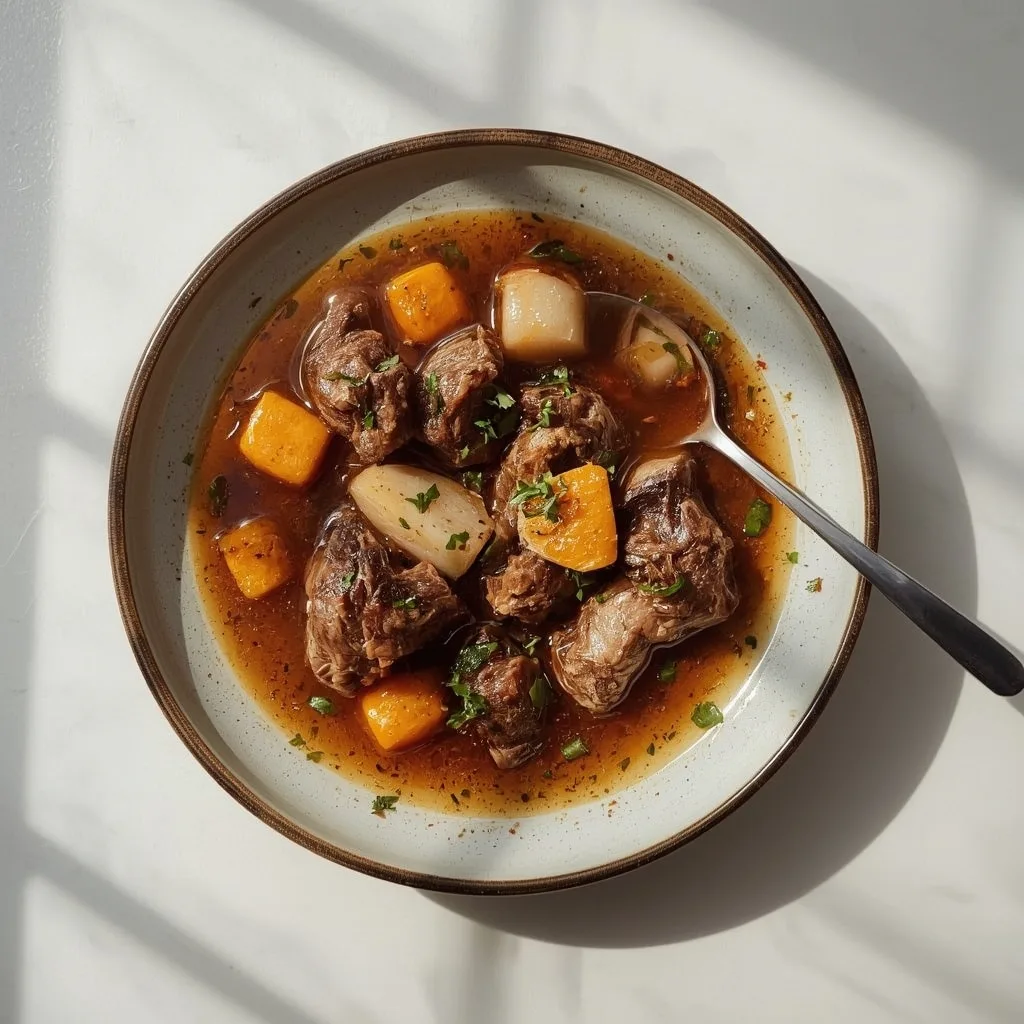
Common Mistakes and How I Fixed Them
Here is what tripped me up the first few times.
- Boiling instead of simmering — A rolling boil makes the stock cloudy and bitter. Keep the heat low so only tiny bubbles break the surface.
- Skipping the skimming — Foam and impurities left in the pot create a murky, muddy taste. Skim every 20 minutes during the first hour.
- Using too much water — Adding more than 8 cups dilutes the flavor. The bones should be just barely submerged.
- Forgetting the vinegar — Without apple cider vinegar, the stock may stay thin and watery. The acid helps break down collagen.
- Overcooking the vegetables — Roasting vegetables too long makes them bitter. Pull them when the edges are just browned.
- Straining too early — Straining before the stock cools makes it harder to remove fat. Always chill first to let the fat solidify.
What Pairs Perfectly with Gordon Ramsay Lamb Stock
This stock elevates so many dishes. Here are my favorite ways to use it.
- Lamb Stew — Use it as the braising liquid for chunks of lamb shoulder with root vegetables. The stock adds richness that water or broth cannot match.
- Shepherd’s Pie Gravy — Swap chicken broth for this stock in the meat filling. It deepens the savory flavor and thickens beautifully.
- Minted Lamb Sauce — Reduce the stock with fresh mint and a splash of red wine for a quick pan sauce over roasted chops or leg of lamb.
- Barley Soup — Simmer pearl barley, carrots, and celery in this stock for a hearty winter soup. The gelatin gives the soup body without cream.
- Risotto Base — Use the stock instead of chicken broth in risotto. The lamb flavor pairs well with mushrooms, peas, and Parmesan.
- Braised Lentils — Cook French green lentils in the stock with garlic and thyme for a side dish that tastes like it simmered for hours.
Pro Tips for Making Gordon Ramsay Lamb Stock
These small adjustments make a big difference in the final result.
- Roast until deeply browned — Pale bones give pale, weak stock. Let the bones turn a rich mahogany color for maximum flavor.
- Keep the vegetable skins on — Onion skins, carrot peels, and garlic skins add color and subtle flavor. They also save prep time.
- Do not stir during simmering — Stirring kicks sediment up into the liquid, making the stock cloudy. Let it sit undisturbed.
- Skim early and often — Most foam rises in the first 30 minutes. Skim it off immediately to prevent it from breaking down and clouding the stock.
- Use a wide pot — A wider surface area allows more steam to escape, concentrating the flavor faster. An 8-quart stockpot works perfectly.
- Chill before defatting — Fat is easier to remove when solid. Refrigerate the stock overnight, then peel off the fat layer with a spoon.
- Freeze in small portions — Ice cube trays or muffin tins give you perfect 1-ounce portions for sauces and quick recipes.
Inspiring Variations of Gordon Ramsay Lamb Stock
Here is how to adapt the recipe for different cuisines and uses.
- Middle Eastern Spice Blend — Add 1 cinnamon stick, 4 cardamom pods, and 1 teaspoon cumin seeds to the simmering stock. Use this in lamb tagines or couscous.
- Tomato and Herb Version — Stir in 1 cup crushed tomatoes and 2 sprigs of oregano after deglazing. This makes a richer base for pasta sauces.
- Smoky Lamb Stock — Roast the bones over a charcoal grill instead of the oven. Add a dried chipotle pepper during simmering for a subtle heat.
- Mushroom-Infused Stock — Toss 4 ounces dried porcini mushrooms into the pot with the water. This adds an earthy depth perfect for vegetarian-style soups.
- Red Wine Lamb Stock — Replace the white wine with 1/2 cup dry red wine like Cabernet Sauvignon. This creates a deeper color and fuller body for beefy stews.
- Herb Garden Mix — Add 2 sprigs fresh sage, 1 sprig fresh tarragon, and 2 parsley stems alongside the rosemary and thyme. Great for lighter spring dishes.
How to Store Gordon Ramsay Lamb Stock Properly
Storing it correctly keeps the flavor fresh for weeks.
- Refrigerator storage — Use airtight glass containers or mason jars. Leave 1 inch of headspace for expansion. It stays fresh for up to 5 days.
- Freezer storage — Pour into zip-top freezer bags and lay them flat to save space. Squeeze out all air before sealing. It keeps for up to 6 months.
- Ice cube tray method — Freeze the stock in ice cube trays, then transfer the cubes to a freezer bag. Each cube is about 2 tablespoons, perfect for sauces.
- Label everything — Write the date and volume on each container. Stock looks identical to water when frozen, so labeling prevents confusion.
- Cool before storing — Let the stock cool to room temperature for no more than 1 hour before refrigerating. Rapid cooling prevents bacterial growth.
Smart Reheating Tips for Gordon Ramsay Lamb Stock
Here is how to bring it back to life without losing quality.
- Stovetop method — Pour the stock into a saucepan and heat over medium-low heat. Bring it to a gentle simmer, about 10 minutes. Do not boil rapidly or it can cloud.
- Microwave method — Transfer to a microwave-safe bowl and heat in 60-second bursts, stirring between each. Use 50% power to avoid overheating.
- Direct from frozen — Add frozen stock cubes directly to simmering soups or stews. They melt in 3-4 minutes without thinning the dish.
- Thawing overnight — Move the frozen stock to the refrigerator 12 hours before use. This preserves the gelatin structure better than rapid thawing.
FAQs
Can I freeze Gordon Ramsay Lamb Stock?
Yes, it freezes perfectly for up to 6 months. Use airtight containers or freezer bags, leaving 1 inch of headspace for expansion.
How long does Gordon Ramsay Lamb Stock last in the fridge?
Properly stored in an airtight container, it stays fresh for up to 5 days. Always refrigerate it within 1 hour of cooling.
Why is my lamb stock not jelling?
It likely needs more collagen from the bones. Use more knuckle or neck bones next time, and do not skip the apple cider vinegar which helps extract gelatin.
Can I use this stock in place of beef stock?
Yes, but it has a distinct lamb flavor that works best in lamb dishes or hearty stews. It is too strong for delicate soups like chicken noodle.
Do I need to peel the vegetables first?
No, leave the skins on. Onion skins, carrot peels, and garlic skins add color and flavor without any bitterness.
Can I make this stock in a slow cooker?
Yes, after roasting the bones and vegetables, transfer everything to a slow cooker. Cook on low for 8-10 hours, then strain and cool as directed.
Nutritional Value
Based on 1 serving = 1/4 of the total stock (about 2 cups).
- Calories: 35
- Protein: 3g
- Fat: about 1g
- Carbohydrates: 3g
- Fiber: around 0.5g
- Sugar: 1.5g
- Sodium: roughly 295mg
Wrapping Up
Gordon Ramsay Lamb Stock is the kind of foundational recipe that makes everything else taste better. Once you have a batch in the freezer, hearty stews and sauces come together in minutes.
I hope you give it a try — your kitchen will smell amazing, and your dishes will thank you.
PrintGordon Ramsay Lamb Stock
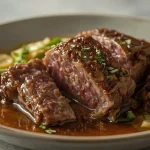
This rich, deeply flavored lamb stock forms the backbone of hearty stews, sauces, and braises. The bones are roasted until deeply caramelized before a slow, gentle simmer extracts every ounce of gelatin and savor, yielding a stock that is robust, clear, and utterly luxurious.
- Prep Time: 20
- Cook Time: 300
- Total Time: 320
- Yield: 4 1x
- Category: Sauce/Base
- Method: Stovetop
- Cuisine: British
Ingredients
- 3 lb lamb bones (knuckle, shank, or neck bones), cut into 3-inch pieces
- 2 tbsp olive oil
- 2 medium carrots, unpeeled, roughly chopped into 1-inch pieces
- 2 medium celery stalks, roughly chopped into 1-inch pieces
- 1 medium onion, unpeeled, quartered
- 1 head of garlic, halved crosswise
- 2 tbsp tomato paste
- 1/2 cup dry white wine
- 8 cups cold water
- 2 sprigs fresh rosemary
- 3 sprigs fresh thyme
- 1 bay leaf
- 1 tsp black peppercorns
- 1 tsp kosher salt
- 2 tbsp apple cider vinegar
Instructions
- Preheat your oven to 425°F (218°C). Arrange the lamb bones in a single layer in a large roasting pan. Drizzle with olive oil and toss to coat. Roast for 25-30 minutes, turning once halfway through, until the bones are deeply browned and fragrant. This caramelization is critical for a deep, savory flavor and rich color.
- Add the chopped carrots, celery, and quartered onion to the pan around the bones. Return the pan to the oven and roast for another 20 minutes, until the vegetables are softened and browned at the edges. The natural sugars in the vegetables will caramelize, adding sweetness and complexity to the stock.
- Remove the pan from the oven and carefully transfer the roasted bones and vegetables to a large stockpot (at least 8-quart capacity). Set the roasting pan aside; do not wash it yet — the browned bits stuck to the bottom are pure flavor.
- Place the roasting pan over two burners on your stovetop over medium heat. Add the tomato paste and stir constantly with a wooden spoon for 1-2 minutes, until it darkens and becomes fragrant. Pour in the white wine and deglaze the pan by scraping up all the browned bits (fond) with the wooden spoon. Let the wine simmer until reduced by half, about 2 minutes, then pour this sauce into the stockpot with the bones and vegetables.
- Pour the 8 cups of cold water into the stockpot, making sure the bones and vegetables are completely submerged. Add the rosemary, thyme, bay leaf, peppercorns, salt, and apple cider vinegar. The vinegar helps extract collagen and minerals from the bones, creating a more gelatinous, nutritious stock.
- Place the stockpot on the stovetop over high heat. Bring it to a gentle simmer — you want small bubbles breaking the surface, not a rolling boil. This typically takes 10-12 minutes. Skim any foam or impurities that rise to the surface with a large spoon, discarding the foam. Skimming ensures a clear, clean-tasting stock.
- Once the foam is skimmed, reduce the heat to low to maintain a bare simmer. Cover the pot partially with a lid — leave a small gap for steam to escape. Cook for 4 to 5 hours, checking every hour to ensure it remains at a gentle simmer and skimming any foam that accumulates. Do not stir; stirring can cloud the stock.
- After 4-5 hours, the stock should be aromatic and deeply golden. Remove the pot from the heat. Using tongs or a slotted spoon, remove and discard the large bones and vegetable pieces. Set a fine-mesh strainer lined with cheesecloth over a large heatproof bowl or pot. Carefully pour the stock through the strainer to remove any remaining solids and sediment.
- Allow the strained stock to cool at room temperature for up to 1 hour, then transfer it to the refrigerator. Chill uncovered until the fat solidifies on the surface, at least 4 hours or overnight. Once chilled, skim off and discard the solid fat layer. This yields a clean, intensely flavored stock that can be used immediately or stored.
- To store, pour the stock into airtight containers or zip-top freezer bags, leaving 1-inch headspace for expansion. The stock can be refrigerated for up to 5 days or frozen for up to 6 months. For quick use, freeze in ice cube trays for portioned additions to sauces and braises.
Notes
Storage: Refrigerate in airtight containers for up to 5 days. Freezing: Freeze in freezer-safe containers or bags for up to 6 months. Reheating: Thaw in refrigerator overnight, then reheat gently in a saucepan over medium-low heat until simmering (about 10 minutes). Do not boil rapidly, as this can cloud the stock. For a more concentrated flavor, you can reduce the stock by simmering it uncovered after straining until it reaches the desired intensity, then cool and store.
Nutrition
- Calories: 35
- Sugar: 1.5g
- Sodium: 295mg
- Unsaturated Fat: 0.3g
- Carbohydrates: 3g
- Fiber: 0.5g
- Protein: 3g
- Cholesterol: 8mg
Keywords: Gordon Ramsay lamb stock, lamb stock recipe, bone broth, lamb bone broth, British stock, hearty broth, lamb stew base, slow cooked stock, homemade stock, rich gelatinous stock, lamb soup base