Mary Berry Bavette Steak
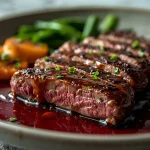
A tender, flavorful bavette steak marinated with fresh herbs and garlic, seared to a perfect medium-rare with a rich red wine pan sauce. This dish boasts a juicy texture and deep, beefy flavors enhanced by aromatic rosemary and thyme.
- Prep Time: 15
- Cook Time: 20
- Total Time: 35
- Yield: 4 1x
- Category: Main Course
- Method: Stovetop
- Cuisine: British
Ingredients
- 1.5 lb bavette steak (also known as flank steak), patted dry
- 2 tbsp extra virgin olive oil, divided
- 2 cloves garlic, minced
- 1 tbsp fresh rosemary, finely chopped
- 1 tbsp fresh thyme leaves
- 1 tsp kosher salt
- 1/2 tsp freshly ground black pepper
- 1 medium shallot, finely diced
- 1/2 cup dry red wine
- 1/2 cup beef broth
- 2 tbsp unsalted butter
- Additional kosher salt and black pepper to taste
Instructions
- In a small bowl, combine 1 tbsp olive oil, minced garlic, chopped rosemary, thyme, 1 tsp kosher salt, and 1/2 tsp pepper. Whisk until emulsified to create a marinade that evenly coats the steak and infuses it with herbaceous flavors.
- Pat the bavette steak dry with paper towels to remove excess moisture, which ensures better searing. Rub the marinade all over the steak, coating it evenly, and let it sit at room temperature for 30 minutes to allow the flavors to penetrate and bring the steak to room temperature for even cooking.
- Place a large cast-iron skillet or heavy-bottomed pan over medium-high heat. Allow it to preheat for 3-5 minutes until very hot; test by sprinkling a few drops of water—they should sizzle and evaporate immediately, indicating the pan is ready for searing.
- Add the remaining 1 tbsp olive oil to the hot pan, swirling to coat the surface. Carefully place the marinated steak in the pan; it should sizzle loudly upon contact. Cook undisturbed for 3-4 minutes to develop a deep brown crust, avoiding movement to ensure proper Maillard reaction.
- Using tongs, flip the steak to sear the second side. Cook for another 3-4 minutes, reducing the heat to medium if the crust is browning too quickly. Aim for an internal temperature of 130°F / 54°C for medium-rare, using an instant-read thermometer inserted into the thickest part.
- Check for doneness by pressing the steak; it should feel firm but yielding for medium-rare. Once the internal temperature reaches 130°F / 54°C, transfer the steak to a cutting board. Tent loosely with aluminum foil and let rest for 8-10 minutes to allow juices to redistribute, preventing dryness when sliced.
- While the steak rests, make the pan sauce. In the same skillet over medium heat, add the diced shallot. Sauté for 2-3 minutes until softened and fragrant, stirring frequently to prevent burning and to release its sweet aroma.
- Pour in the dry red wine to deglaze the pan, scraping up any browned bits from the bottom with a wooden spoon. These bits add depth of flavor to the sauce. Increase the heat to medium-high and let the wine simmer until reduced by half, about 3-4 minutes, until it thickens slightly and the alcohol smell dissipates.
- Add the beef broth to the reduced wine. Bring to a simmer and let it reduce for 4-5 minutes, stirring occasionally, until the sauce coats the back of a spoon. Season with additional salt and pepper to taste, balancing the flavors.
- Remove the skillet from the heat. Whisk in the unsalted butter until melted and fully incorporated, which adds richness and a glossy finish to the sauce. Keep the sauce warm while finishing the steak.
- After resting, slice the steak against the grain into 1/4-inch thick slices. Cutting against the grain shortens the muscle fibers, ensuring each bite is tender and easy to chew.
- Arrange the sliced steak on a serving platter. Drizzle the warm red wine pan sauce over the top, ensuring even coverage. Serve immediately while hot for the best texture and flavor.
- For an alternative cooking method, after searing the steak on both sides, transfer the skillet to a preheated oven at 400°F / 204°C for 5-7 minutes to reach the desired internal temperature, using the same thermometer check. This method is useful for thicker cuts or if you prefer oven finishing.
- Always use an instant-read thermometer for accuracy; avoid guessing doneness to prevent overcooking. Let the steak rest fully before slicing to retain juiciness, and serve with sides like roasted vegetables or mashed potatoes for a complete meal.
Notes
Store leftover steak and sauce in an airtight container in the refrigerator for up to 3-4 days. Freeze cooked steak slices in a freezer-safe bag for up to 3 months. Reheat gently in a skillet over low heat with a splash of broth to prevent drying, or in a preheated oven at 300°F / 149°C for 10-15 minutes until warmed through. Do not microwave, as it can toughen the meat.
Nutrition
- Calories: 408
- Sugar: 1g
- Sodium: 525mg
- Saturated Fat: 11g
- Carbohydrates: 2g
- Fiber: 1g
- Protein: 36g
- Cholesterol: 135mg
Keywords: Mary Berry bavette steak, bavette steak recipe, British steak dish, pan-seared steak, herb-marinated beef, red wine sauce, weeknight dinner, special occasion meal, French cut steak, tender beef, easy steak recipe, gourmet main course
Find it online: https://britishrecipes.uk/mary-berry-bavette-steak/