Nigella Cream Cheese Frosting
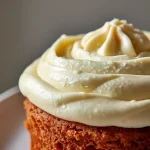
A luxuriously smooth and tangy cream cheese frosting with a perfect balance of sweetness and acidity. This recipe yields a stable, spreadable frosting ideal for carrot cakes, red velvet cakes, or cinnamon rolls, with a texture that holds its shape without being overly stiff.
- Prep Time: 15
- Total Time: 15
- Yield: 4 1x
- Category: Dessert
- Method: No-Cook
- Cuisine: American
Ingredients
- 8 oz (226 g) full-fat Philadelphia-style cream cheese, cold
- 1/2 cup (113 g) unsalted European-style butter (82-84% fat), at cool room temperature (65-68°F / 18-20°C)
- 1 teaspoon pure vanilla extract
- 1/4 teaspoon fine sea salt
- 3 1/2 cups (420 g) confectioners’ sugar, sifted
- 1 tablespoon fresh lemon juice, from about 1/2 medium lemon
Instructions
- Ensure all ingredients are at their specified temperatures: cold cream cheese straight from the refrigerator and butter that is cool to the touch but pliable. This temperature differential is crucial for creating a stable emulsion that won’t become greasy or separate. Using a stand mixer fitted with the paddle attachment or a large bowl with a hand mixer, combine the cold cream cheese and cool butter.
- Mix on medium-low speed for 1-2 minutes until the mixture is just combined and looks like coarse, pebbly cottage cheese. Do not overmix at this stage, as beating too much will incorporate too much air and warm the fats, leading to a soft frosting. Scrape down the bowl and paddle with a flexible spatula to ensure even mixing.
- Add the vanilla extract and fine sea salt to the bowl. Mix on low speed for 30 seconds until incorporated. The salt enhances the overall flavor profile and cuts the sweetness, while the vanilla provides a warm aromatic base.
- With the mixer on the lowest possible setting, gradually add the sifted confectioners’ sugar about 1/2 cup at a time. Allow each addition to be fully incorporated before adding the next. This slow addition prevents a cloud of sugar dust and ensures a smooth, lump-free texture.
- Once all the sugar is added, increase the mixer speed to medium and beat for exactly 1 minute. The frosting will become noticeably lighter in color and fluffier in texture. Set a timer, as over-beating at this stage can cause the frosting to become too soft and warm.
- Reduce the mixer speed to low and drizzle in the fresh lemon juice. Mix for 30-45 seconds until just combined. The acid from the lemon juice brightens the flavor and helps stabilize the frosting further. Stop mixing as soon as it is homogeneous.
- Stop the mixer and scrape the bowl thoroughly, paying special attention to the bottom where unincorporated butter and cream cheese can hide. Use the paddle attachment to fold the frosting a few times by hand to check for consistency.
- The finished frosting should be thick, smooth, and hold a firm peak when the paddle is lifted. It should be spreadable but not runny. If it feels too soft for your intended use (e.g., piping), cover and refrigerate for 20-30 minutes to firm up before using.
Notes
Storage: Frosting can be stored in an airtight container in the refrigerator for up to 5 days. It will firm up significantly when cold. Freezing: Transfer to a freezer-safe container, press plastic wrap directly onto the surface, and freeze for up to 2 months. Thaw overnight in the refrigerator. Reheating/Reconstituting: Always bring chilled frosting to cool room temperature (about 30 minutes) before re-whipping. Place in a mixing bowl and beat on medium-low speed for 60-90 seconds to restore its smooth, spreadable texture. Do not microwave, as this will break the emulsion.
Nutrition
- Calories: 785
- Sugar: 98g
- Sodium: 215mg
- Unsaturated Fat: 26g
- Carbohydrates: 101g
- Fiber: 0g
- Protein: 5g
- Cholesterol: 120mg
Keywords: nigella cream cheese frosting, cream cheese frosting, cream cheese icing, cake frosting, cupcake frosting, no-cook frosting, tangy frosting, carrot cake frosting, red velvet frosting, frosting recipe, buttercream alternative
Find it online: https://britishrecipes.uk/nigella-cream-cheese-frosting/