
 Ekani Ella
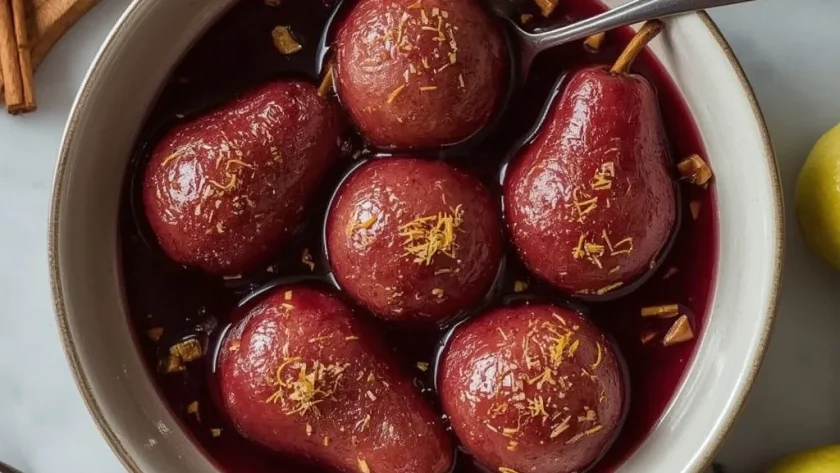
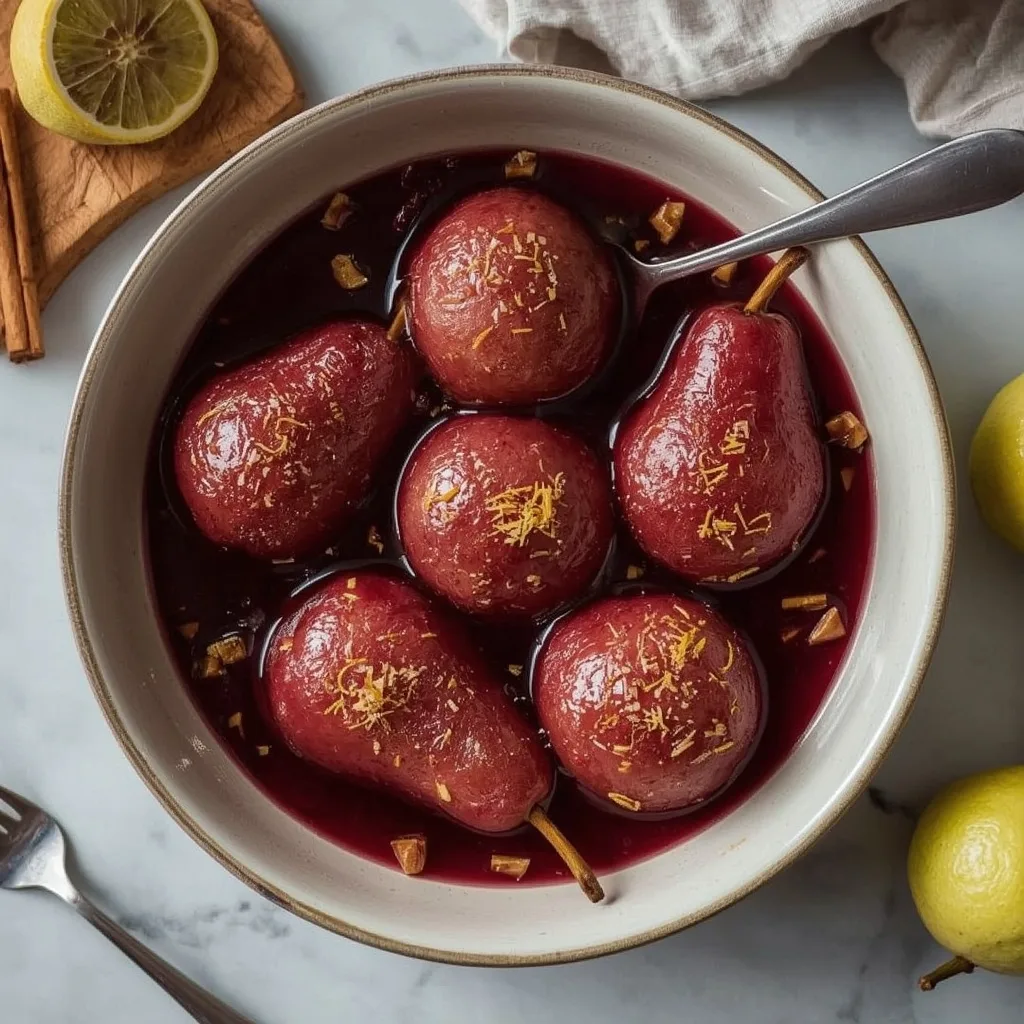
 Mary Berry’s poached pears are exactly the kind of dessert that looks far more complicated than it really is. Tender pears simmered in a spiced red wine syrup until they turned a deep ruby hue. This is a classic British dessert that feels elegant without demanding much effort.
The whole process takes about 45 minutes from start to finish, and I would call this a beginner-friendly recipe. The only slightly tricky moment is lowering the delicate pears into the hot wine syrup without them tipping over, but a slotted spoon makes it easy.
What are Mary Berry’s Poached Pears?
This is a simple stovetop dessert where firm pears are gently simmered in a bath of red wine, sugar, and warm spices. The recipe comes from the British baking tradition, where poached fruit has long been a way to turn everyday ingredients into something special.
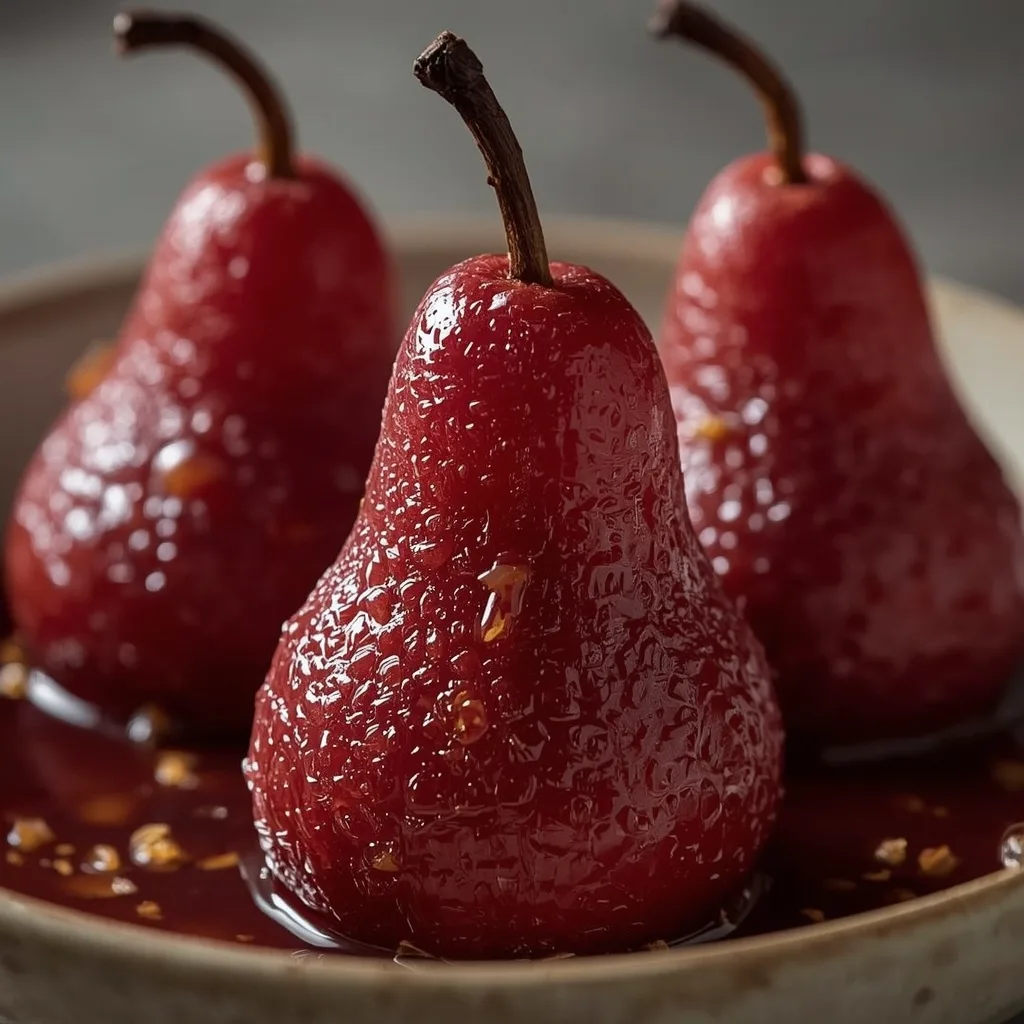
The texture is the real star here. The pears become tender and silky while the wine syrup reduces into a glossy, fragrant sauce. You make this when you want a dessert that impresses guests but does not keep you stuck in the kitchen.
Gather These Fresh Ingredients for Mary Berry Poached Pears
You only need seven ingredients for this dish, and most of them are pantry staples.
The Pears
- 4 firm but ripe pears (Bosc or Conference) — Choose pears that are ripe enough to yield slightly at the stem but still hold their shape during cooking. Peeled with stems left intact, each pear becomes its own serving.
The Poaching Liquid
- 1 bottle (750 ml) dry red wine (Merlot or Cabernet Sauvignon) — The wine forms the base of the syrup and gives the pears their deep color. A dry wine works best, so the sweetness comes from the sugar you control.
- 1 cup (200 g) granulated sugar — This sweetens the wine and helps create the glossy syrup that coats each pear.
The Aromatics
- 1 cinnamon stick (about 3 inches) — Adds warmth without overpowering the fruit. A stick releases flavor slowly, which is exactly what gentle simmering needs.
- 3 whole cloves — Just three cloves give a subtle spicy note. Too many and they dominate the dish.
- 1 strip orange zest (from 1 orange, about 2 inches long, no pith) — The citrus oils brighten the wine syrup and balance the sweetness.
- 1 vanilla bean, split lengthwise (or 1 teaspoon vanilla extract added after poaching) — Vanilla rounds out the flavors. If using extract, stir it in after the syrup reduces so the alcohol does not cook away.
Detailed Step-by-Step Instructions to Make Mary Berry Poached Pears
The process is straightforward — here is how I walk through it without any fuss.
- Prepare the pears — Peel each pear from top to bottom, leaving the stem attached. Cut a thin slice off the bottom so each pear stands upright. If you have a melon baller, scoop out the core from the bottom. This step is optional, but it helps the syrup penetrate the fruit.
- Make the poaching liquid — In a medium saucepan, combine the red wine, granulated sugar, cinnamon stick, whole cloves, and orange zest strip. Split the vanilla bean lengthwise, scrape the seeds into the pot, and add the pod as well. Place the pan over medium heat and stir gently with a wooden spoon until the sugar dissolves completely, about 2-3 minutes.
- Bring to a gentle simmer — You want small bubbles breaking the surface, not a rolling boil. Boiling can toughen the pears and make them cook unevenly.
- Lower the pears into the syrup — Carefully place the peeled pears into the wine syrup, arranging them so they are submerged as much as possible. If needed, place a round of parchment paper directly on the surface (a cartouche) to keep the pears moist and ensure even cooking.
- Poach gently — Reduce the heat to low and maintain a very gentle simmer with just an occasional bubble. Poach for 15-20 minutes, turning the pears once halfway through if they are not fully submerged. The pears are done when a sharp knife inserted into the thickest part meets no resistance. They should be tender but not mushy.
- Transfer the pears — Using a slotted spoon, carefully move the poached pears to a dish and cover loosely with foil to keep them warm.
- Reduce the syrup — Increase the heat to medium-high and bring the remaining poaching liquid to a boil. Let it boil vigorously, stirring occasionally, until reduced by half — about 8-10 minutes. The syrup should become slightly thickened and coat the back of a spoon. If using vanilla extract instead of a bean, stir it in now.
- Strain the syrup — Pour the syrup through a fine-mesh sieve into a clean bowl or measuring cup. Press on the solids to extract every drop of flavor. Discard the cinnamon stick, cloves, orange zest, and vanilla pod (rinse and dry the vanilla pod for another use).
- Taste and adjust — Add a teaspoon of honey or a squeeze of lemon juice if needed to balance the sweetness. Usually, the sugar is sufficient, so taste first.
- Assemble the dish — Place one warm poached pear on each dessert plate. Spoon about 2-3 tablespoons of the reduced syrup over each pear, allowing it to pool around the base.
- Garnish if desired — Top with a thin strip of orange zest, a dollop of lightly whipped cream or crème fraîche, or a scoop of vanilla ice cream. Toasted almonds also work beautifully.
- Serve immediately — The contrast of the tender fruit and the rich wine syrup is most pronounced when the pears are still warm.
Common Mistakes and How I Fixed Them
Here is what tripped me up the first few times I made this dish.
- Overcooking the pears — Leaving them in the wine too long turns them into mush. Start checking at 15 minutes with a knife tip and pull them the moment they feel tender.
- Skipping the cartouche — Without the parchment round floating on top, the exposed part of the pear dries out and cooks unevenly. Cut a circle of parchment and place it directly on the syrup surface.
- Adding the pears too early — Dropping them into the wine before the sugar has dissolved fully can cause the syrup to scorch. Wait until the sugar is completely dissolved and the liquid is at a gentle simmer.
- Using under-ripe pears — Rock-hard pears never soften properly in the poaching time and stay crunchy in the center. Ripe pears yield slightly at the stem and give gently when pressed near the neck.
- Not straining the syrup — Leaving the cloves and cinnamon stick in the finished sauce makes every bite a gamble. Strain through a fine-mesh sieve for a smooth, polished syrup.
- Rushing the reduction — Boiling the syrup on too high heat can burn the sugar before the liquid thickens. Keep the heat at medium-high and stir occasionally.
What Pairs Perfectly with Mary Berry Poached Pears
The right accompaniment turns this simple dessert into a complete experience.
- Lightly whipped cream — The cool, airy texture contrasts beautifully with the warm, tender pear and the rich syrup. Use double cream whipped to soft peaks.
- Crème fraîche — Its tangy edge cuts through the sweetness of the wine syrup and adds a sophisticated note. A generous spoonful on top is all you need.
- Vanilla ice cream — The cold, creamy vanilla melts into the warm syrup and creates a sauce-like effect around the pear. A classic pairing that never disappoints.
- Toasted almonds — A sprinkle of flaked almonds toasted until golden adds crunch and a nutty flavor that complements the cinnamon and cloves. Scatter them just before serving.
- Shortbread biscuits — Buttery, crumbly shortbread provides a textural contrast and soaks up any leftover syrup on the plate. Serve two or three alongside each pear.
- A glass of dessert wine — A late-harvest Riesling or a Muscat de Beaumes-de-Venise echoes the fruity notes in the syrup and makes the course feel like a proper finale.
Pro Tips for Making Mary Berry Poached Pears
After making this recipe many times, here are the tricks that deliver the best results.
- Choose pears that are all the same size — This ensures they cook at the same rate and finish together. Mixing large and small pears means some will be overdone while others remain firm.
- Leave the stems intact — The stems make the pears easier to handle when lowering them into the syrup and create a more elegant presentation on the plate. Just peel carefully around them.
- Use a melon baller to core from the bottom — This removes the tough center seeds without damaging the pear’s shape. The hollow also lets the wine syrup soak into the fruit more deeply.
- Keep the heat low during poaching — A gentle simmer with only occasional bubbles prevents the pears from breaking apart. If the liquid bubbles actively, reduce the heat immediately.
- Turn the pears halfway through — The parts above the syrup line can cook more slowly. A quick turn with a spoon halfway ensures even color and tenderness all around.
- Reserve the vanilla pod after straining — Rinse it, let it dry, and bury it in a jar of sugar for vanilla-scented sugar that lasts for months. Nothing goes to waste.
- Let the pears cool in the syrup if not serving immediately — They continue to absorb flavor as they cool, and the syrup keeps them moist. Store them together in the fridge for up to five days.
Inspiring Variations of Mary Berry Poached Pears
Once you master the basic method, these simple twists keep the recipe interesting.
- White wine and honey version — Replace the red wine with a dry white wine like Sauvignon Blanc. Swap the granulated sugar for ¾ cup (180 ml) of honey. The pears stay pale, and the flavor is lighter and floral.
- Spiced apple cider poach — Use 750 ml of unfiltered apple cider instead of red wine. Add a star anise and a slice of fresh ginger to the spice mix. The result tastes like autumn in a bowl.
- Orange and cardamom variation — Omit the cloves and add 4 crushed green cardamom pods along with an extra strip of orange zest. The cardamom gives the syrup a warm, aromatic lift that pairs well with crème fraîche.
- Port wine poached pears — Use 500 ml of ruby port and 250 ml of water instead of the full bottle of red wine. Reduce the sugar to ½ cup (100 g) because port is naturally sweeter. The pears turn a darker, almost black ruby color.
- Earl Grey tea infusion — Steep 2 Earl Grey tea bags in the wine syrup for 5 minutes before adding the pears. The bergamot notes complement the orange zest beautifully and add a subtle floral layer.
- Ginger and star anise twist — Add 3 thin slices of fresh ginger and 2 star anise along with the cinnamon and cloves. The ginger gives a gentle warmth, and the star anise adds a licorice-like depth.
How to Store Mary Berry Poached Pears Properly
Storage is simple, and the pears actually taste better the next day as they absorb more of the syrup.
- Refrigerate in the syrup — Let the pears cool completely in their poaching liquid, then transfer both pears and syrup to an airtight container. They keep for up to 5 days in the fridge.
- Store the syrup separately — If you only have a few pears left, strain the syrup into a separate jar. The reduced syrup lasts up to 2 weeks in the refrigerator and can be drizzled over yogurt, pancakes, or ice cream.
- Freeze for longer storage — Place the cooled pears and syrup in a freezer-safe container, leaving about an inch of headspace. They freeze well for up to 3 months.
- Thaw overnight in the fridge — When ready to use, transfer the container from the freezer to the refrigerator and let it thaw slowly overnight. Do not thaw at room temperature, as the texture can become mushy.
- Reheat gently after thawing — Warm the pears and syrup together in a saucepan over low heat, or microwave individual portions on 50% power for 1-2 minutes until just warm. Avoid boiling or the pears may fall apart.
Smart Reheating Tips for Mary Berry Poached Pears
Reheating is straightforward as long as you keep the heat gentle.
- Stovetop reheating — Place the pears and syrup in a small saucepan over low heat. Warm for 5-7 minutes, turning the pears once gently with a spoon, until the syrup is hot and the pears are heated through.
- Microwave reheating — Place one pear and a few tablespoons of syrup in a microwave-safe bowl. Cover loosely and microwave on 50% power for 1-2 minutes. Check by touching the pear — it should feel warm all the way through.
- Oven reheating — Arrange the pears in a baking dish and spoon the syrup over them. Cover with foil and warm in a 150°C (300°F) oven for about 10 minutes. This method works well if you are serving multiple portions at once.
- Avoid boiling during reheating — High heat makes the pears break down and turns the syrup grainy. Keep the temperature low and stir the syrup gently if it looks like it is separating.
FAQs
Can I freeze Mary Berry Poached Pears?
Yes, you can freeze them for up to 3 months. Place the cooled pears and syrup in a freezer-safe container, leaving some space for expansion. Thaw overnight in the refrigerator and reheat gently over low heat.
How long do Mary Berry’s poached pears last in the fridge?
Stored in an airtight container with the syrup, the pears keep well for up to 5 days. The flavor actually deepens after a day or two as the pears absorb more of the spiced wine syrup.
What type of pears are best for poaching?
Firm but ripe Bosc or Conference pears are ideal. They hold their shape during cooking and have a texture that stays tender without turning mushy. Avoid overly soft or mealy pears.
Can I use non-alcoholic wine?
Yes, non-alcoholic red wine works as a substitute. The flavor will be slightly less complex, so consider adding an extra pinch of cinnamon and a splash of vanilla extract to compensate.
Do I have to core the pears?
Coring is optional but recommended. A melon baller removes the tough center seeds without breaking the pear’s shape, and the hollow allows the syrup to penetrate the fruit more thoroughly during poaching.
Can I make this recipe vegan?
Yes, the recipe is already vegan as written. Just skip the cream or ice cream garnish, or use a plant-based alternative like coconut yogurt or a scoop of vegan vanilla ice cream.
Nutritional Value
Based on 1 serving = 1 poached pear with about 2-3 tablespoons of syrup.
- Calories: 440
- Protein: 1g
- Fat: 0g
- Carbohydrates: 72g
- Fiber: 5g
- Sugar: 65g
- Sodium: around 5mg
Wrapping Up
Mary Berry’s Poached Pears deliver a restaurant-quality dessert with minimal fuss and ingredients you likely already have. The tender fruit, glossy wine syrup, and warm spices create something that feels indulgent without being heavy.
Give this recipe a try for your next dinner party or quiet weekend treat. You will be surprised how something so simple can feel so special.
PrintMary Berry Poached Pears
A classic British dessert, these wine-poached pears are tender, fragrant, and elegant. Simmered in a spiced red wine syrup with cinnamon, cloves, orange zest, and vanilla, the pears take on a deep ruby hue and a subtly sweet, complex flavor. Serve warm with the reduced syrup and a dollop of cream for an impressive yet simple finale to any meal.
- Prep Time: 15
- Cook Time: 30
- Total Time: 45
- Yield: 4 1x
- Category: Dessert
- Method: Stovetop
- Cuisine: British
Ingredients
- 4 firm but ripe pears (Bosc or Conference), peeled, stems left intact
- 1 bottle (750 ml) dry red wine (Merlot or Cabernet Sauvignon)
- 1 cup (200 g) granulated sugar
- 1 cinnamon stick (about 3 inches)
- 3 whole cloves
- 1 strip orange zest (from 1 orange, about 2 inches long, no pith)
- 1 vanilla bean, split lengthwise (or 1 teaspoon vanilla extract added after poaching)
Instructions
- Prepare the pears: Using a vegetable peeler, peel each pear from top to bottom, leaving the stem attached. Cut a thin slice off the bottom so each pear stands upright. If desired, use a melon baller to scoop out the core from the bottom (optional, but helps syrup penetrate).
- In a medium saucepan (large enough to hold the pears in a single layer), combine the red wine, granulated sugar, cinnamon stick, whole cloves, and orange zest strip. Split the vanilla bean lengthwise with a paring knife and scrape the seeds into the pot, then add the pod as well.
- Place the pan over medium heat and stir gently with a wooden spoon until the sugar is fully dissolved, about 2-3 minutes. Bring the mixture to a gentle simmer—you should see small bubbles breaking the surface, not a rolling boil.
- Carefully lower the peeled pears into the wine syrup, arranging them so they are submerged as much as possible. If necessary, place a round of parchment paper directly on the surface (a cartouche) to keep the pears moist and ensure even cooking.
- Reduce the heat to low and maintain a very gentle simmer—just an occasional bubble. Poach the pears for 15-20 minutes, turning them once halfway through with a spoon if they are not fully submerged. The pears are done when a sharp knife inserted into the thickest part meets no resistance; they should be tender but not mushy.
- Using a slotted spoon, carefully transfer the poached pears to a dish and set aside. Keep them warm by covering loosely with foil while you finish the sauce.
- Increase the heat to medium-high and bring the remaining poaching liquid to a boil. Let it boil vigorously, stirring occasionally with a wooden spoon to prevent scorching, until reduced by half—about 8-10 minutes. The syrup should become slightly thickened and coat the back of a spoon. If you used vanilla extract instead of a bean, stir it in now.
- Strain the syrup through a fine-mesh sieve into a clean bowl or measuring cup to remove the cinnamon stick, cloves, orange zest, and vanilla pod (rinse and dry the vanilla pod for another use). Press on the solids to extract every drop of flavor.
- Taste the syrup and adjust sweetness if needed—add a teaspoon of honey or a squeeze of lemon juice to balance, though the sugar is usually sufficient.
- To serve, place one warm poached pear on each dessert plate. Spoon about 2-3 tablespoons of the reduced syrup over each pear, allowing it to pool around the base.
- Optionally, garnish with a thin strip of orange zest, a dollop of lightly whipped cream or crème fraîche, or a scoop of vanilla ice cream. The pears are also wonderful with a sprinkle of toasted almonds.
- Serve immediately while the pears are still warm, as the contrast of the tender fruit and the rich wine syrup is most pronounced at that temperature.
Notes
Let the pears cool completely in their syrup if not serving immediately; then transfer pears and syrup to an airtight container and refrigerate for up to 5 days. To reheat, gently warm the pears and syrup in a saucepan over low heat, or microwave individual portions on 50% power for 1-2 minutes until just warm. The poached pears can also be frozen in the syrup for up to 3 months—thaw overnight in the fridge and reheat gently. Avoid overcooking the pears initially, as reheating will soften them further. The reduced syrup can be stored separately for up to 2 weeks in the refrigerator.
Nutrition
- Calories: 440
- Sugar: 65g
- Sodium: 5mg
- Saturated Fat: 0g
- Carbohydrates: 72g
- Fiber: 5g
- Protein: 1g
- Cholesterol: 0mg
Keywords: mary berry poached pears, poached pears recipe, red wine poached pears, british dessert, spiced pears, easy poached pears, classic dessert, winter fruit dessert, vanilla bean pears, cinnamon poached pears, fruit poached in wine