 Ekani Ella
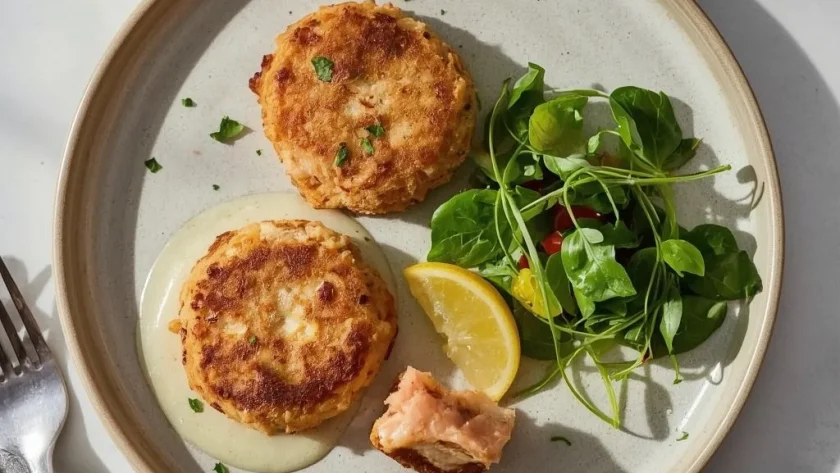
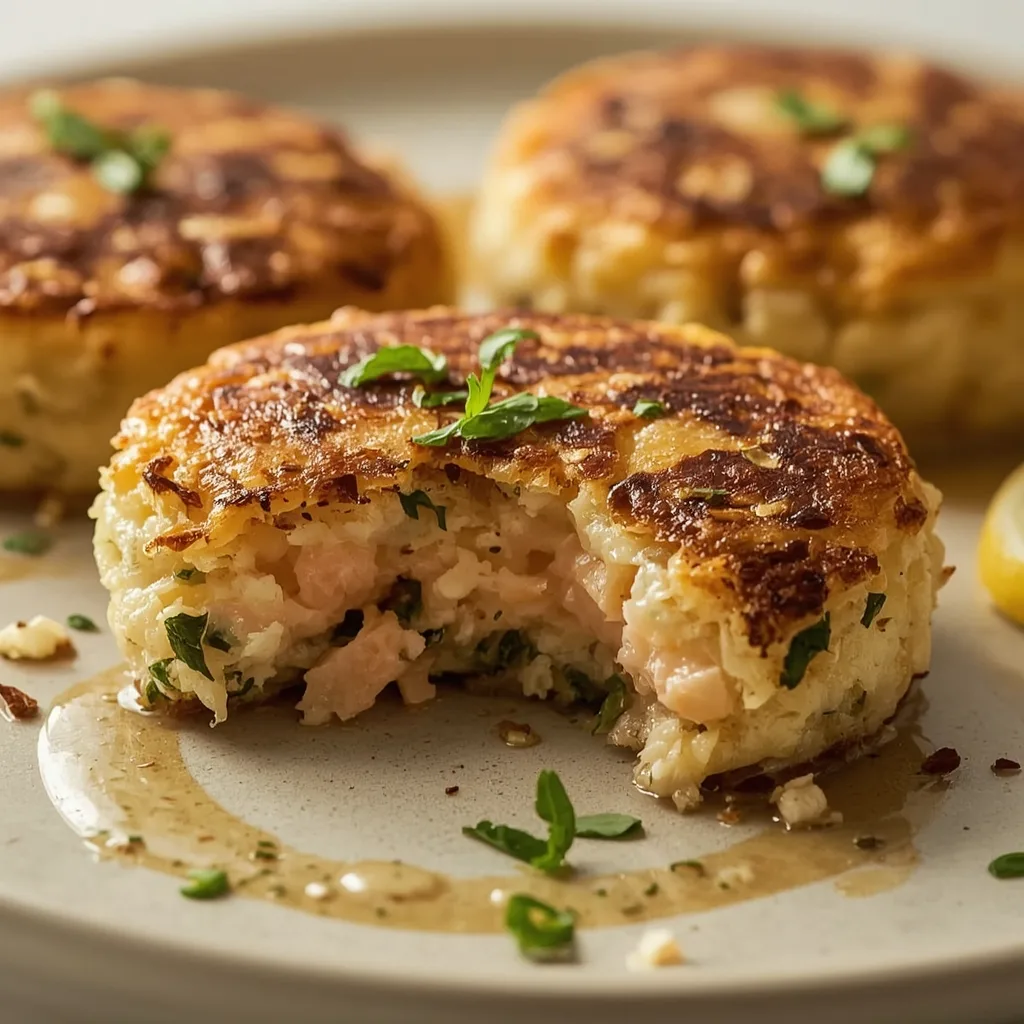
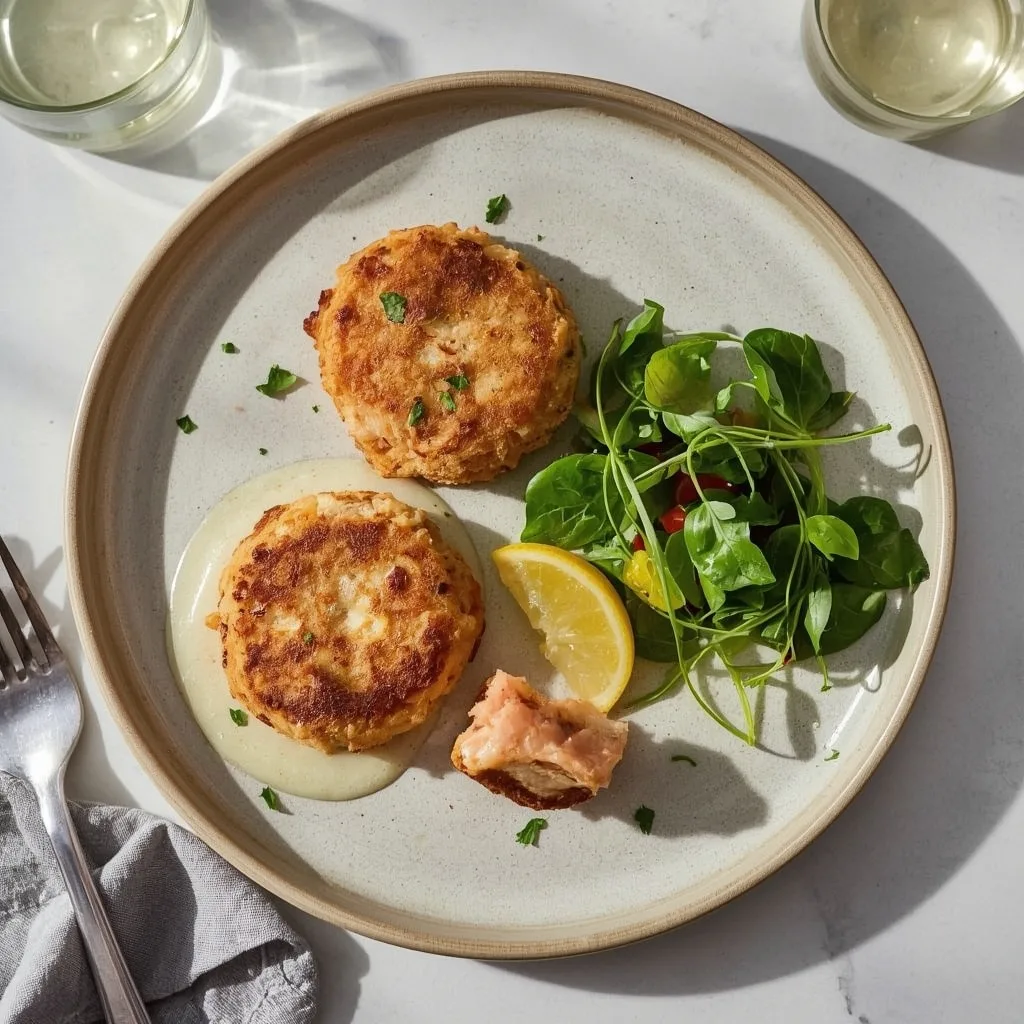
 These Nigel Slater Salmon Fish Cakes are golden and crisp on the outside, with a tender, flaky interior punctuated by fresh herbs and a hint of lemon. They come together quickly and feel special without being fussy.
This recipe takes about 43 minutes total and is beginner-friendly. The only mildly tricky part is poaching the salmon just until it flakes, but the visual cues in the instructions make that simple. Serve these for a light main course or a satisfying lunch.
What are Nigel Slater’s Salmon Fish Cakes?
This dish combines poached salmon with fresh dill, chives, lemon zest, and Greek yogurt, then shapes the mixture into patties coated in breadcrumbs and pan-fried until crisp. It follows Nigel Slater’s straightforward, ingredient-focused style that lets each component shine.
The texture is satisfyingly contrasty — a crunchy golden crust gives way to a moist, tender centre that tastes fresh and bright. These cakes are perfect for a midweek supper when you want something effortless yet impressive.
Gather These Fresh Ingredients for Nigel Slater Salmon Fish Cakes
Each ingredient plays a specific role in building flavour and texture. Here is everything you need, organised by category.
Protein and Dairy
- 1 pound skinless salmon fillet — The backbone of the dish. Use a thick, centre-cut fillet for even cooking and easy flaking.
- 1 large egg, lightly beaten — Binds the mixture without making it heavy. It helps the cakes hold their shape during frying.
- 1/4 cup full-fat Greek yogurt — Adds moisture and a subtle tang. Full-fat works best here; low-fat can make the cakes dry.
Aromatics and Seasoning
- 2 tablespoons fresh lemon juice — Brightens the salmon and cuts through the richness. Freshly squeezed is essential.
- 1 teaspoon finely grated lemon zest — Provides concentrated lemon flavour without extra liquid. Only grate the yellow part.
- 1/4 cup fresh dill, finely chopped — Gives a classic, aromatic note that pairs beautifully with salmon. Dry dill won’t work the same.
- 2 tablespoons fresh chives, snipped — Adds a mild onion-like freshness. Snip them just before mixing to keep them vibrant.
- 1/2 teaspoon fine sea salt — Seasons the mixture evenly. Table salt is fine but use slightly less.
- 1/4 teaspoon freshly ground black pepper — A little heat and depth. Freshly ground truly makes a difference here.
Breading and Cooking Fat
- 1/2 cup plain dry breadcrumbs, divided — Half goes into the mixture for structure; the other half coats the outside for that golden crust. Panko works in a pinch.
- 3 tablespoons olive oil, divided — Used for pan-frying. It gives a clean, fruity flavour and helps achieve a crisp exterior.
Detailed Step-by-Step Instructions to Make Nigel Slater Salmon Fish Cakes
The process is straightforward — here is how I walk through it. Each step builds on the last to ensure perfect results.
- Poach the Salmon — Place the fillet in a small skillet and add enough cold water to cover it by 1 inch. Bring to a gentle simmer over medium heat, then reduce to low, cover, and cook 6 to 8 minutes until opaque and flaking easily — an instant-read thermometer should hit 145°F (63°C). Transfer to a plate with a slotted spatula, cool 5 minutes, then flake into small chunks, discarding any bones or skin.
- Mix the Base — In a large bowl, combine the flaked salmon, beaten egg, Greek yogurt, lemon juice, lemon zest, dill, chives, salt, pepper, and 1/4 cup of the breadcrumbs. Stir gently with a fork until just blended — it should hold together when pressed but stay moist. Overmixing turns the cakes dense.
- Shape and Chill — Spread the remaining 1/4 cup of breadcrumbs on a shallow plate. Divide the mixture into 8 equal portions (about 1/3 cup each) and shape into patties 3/4 inch thick. Gently press each patty into the breadcrumbs on both sides to coat evenly, then transfer to a parchment-lined tray. Refrigerate uncovered for 15 minutes — this firms them up so they hold together during frying.
- Pan-Fry to Golden Perfection — Heat 2 tablespoons of olive oil in a large nonstick skillet over medium heat until the oil shimmers and flows like water. Place 4 patties in the skillet without crowding — they should sizzle gently on contact. Cook 3 to 4 minutes per side until deep golden brown and crisp, flipping once with a thin spatula. Transfer to a paper towel-lined plate and keep warm in a 200°F (93°C) oven while you cook the second batch with the remaining 1 tablespoon oil.
- Serve Immediately — Present the cakes hot with lemon wedges, a dollop of Greek yogurt, or a simple green salad alongside. They are best fresh from the pan.
Common Mistakes and How I Fixed Them
Here is what tripped me up the first few times I made this recipe.
- Overmixing the batter — The mixture becomes dense and heavy. Stir only until combined — a few lumps are fine.
- Skipping the chill step — Patties fall apart in the pan. Always refrigerate for at least 15 minutes to firm them up.
- Crumbling fish from overcooking — Salmon that is too dry won’t bind well. Poach just until it flakes, then stop.
- Using dry herbs instead of fresh — The flavour turns flat and less vibrant. Fresh dill and chives are non-negotiable here.
- Crowding the skillet — The cakes steam rather than crisp. Fry in batches, giving each patty room to breathe.
- Flipping too early — The crust tears if the cake hasn’t set. Wait until the underside is deep golden brown before turning.
What Pairs Perfectly with Nigel Slater Salmon Fish Cakes
These cakes are versatile and pair well with simple sides that don’t overshadow their delicate flavour. Here are my favourite companions.
- Lemon-dressed green salad — A handful of mixed leaves with a squeeze of lemon and olive oil cuts the richness perfectly.
- Cucumber and yogurt dip — Grated cucumber squeezed dry, stirred into Greek yogurt with a pinch of salt and mint — cool and refreshing.
- Buttered new potatoes — Boiled until tender, tossed with butter and a sprinkle of dill — classic British comfort.
- Roasted asparagus — Tossed with olive oil, salt, and pepper, then roasted at 400°F (204°C) for 10 minutes until crisp-tender.
- Light coleslaw — Shredded cabbage, carrot, and apple with a yogurt-based dressing instead of mayonnaise for a fresher bite.
- Warm crusty bread — A slice of sourdough or baguette to soak up any leftover herby crumbs on the plate.
Pro Tips for Making Nigel Slater Salmon Fish Cakes
These small adjustments make a noticeable difference in the final result. Each one addresses a common pitfall.
- Grate the lemon zest first — Zesting before juicing is easier and prevents the grater from slipping. Microplane works best.
- Pat the salmon dry after poaching — Extra moisture dilutes the mixture and makes the cakes harder to handle. Use a paper towel gently.
- Measure breadcrumbs by weight if possible — A lightly packed cup can vary by 20 grams. For consistency, use a kitchen scale.
- Use a thin metal spatula for flipping — It slides under the cake without breaking the crust. Silicone spatulas are too thick.
- Keep the oil temperature medium, not high — Too hot burns the breadcrumbs before the centre warms through. The oil should shimmer, not smoke.
- Refrigerate the shaped patties uncovered — This dries the surface slightly, helping the breadcrumb coating adhere better during frying.
- Flake the salmon into small, even chunks — Uneven pieces create pockets of dense or dry texture. Aim for pieces about 1/2 inch each.
Inspiring Variations of Nigel Slater Salmon Fish Cakes
This base recipe welcomes creativity. Here are several twists that work well, each requiring specific swaps.
- Smoked salmon version — Replace 4 ounces of the poached salmon with chopped smoked salmon. Reduce salt slightly to balance the saltiness.
- Herb swap with parsley and tarragon — Substitute the dill and chives with 1/4 cup flat-leaf parsley and 1 tablespoon tarragon, both finely chopped. Earthy and slightly anise-like.
- Cajun-spiced cakes — Add 1 teaspoon Cajun seasoning and 1/4 teaspoon cayenne to the mixture. Serve with remoulade sauce for a bold twist.
- Mediterranean twist with olives and capers — Fold in 2 tablespoons chopped Kalamata olives and 1 tablespoon rinsed capers. The briny pop works brilliantly.
- Gluten-free adaptation — Use gluten-free breadcrumbs (or almond flour for the coating) and ensure all other ingredients are certified gluten-free.
- Lighter baked version — Instead of frying, place the breaded patties on a parchment-lined baking sheet, spray with oil, and bake at 400°F (204°C) for 12 to 15 minutes, flipping halfway.
How to Store Nigel Slater Salmon Fish Cakes Properly
These cakes store well if you follow a few key steps. Each method preserves texture and flavour.
- Refrigerate cooked leftovers — Place them in an airtight container layered with parchment paper. They stay good for up to 3 days.
- Freeze uncooked patties flat — Arrange the breaded patties in a single layer on a baking sheet and freeze until solid (about 2 hours), then transfer to a freezer bag for up to 3 months.
- Separate layers with parchment — If stacking cooked cakes, place a square of parchment between each one to prevent sticking.
- Label the freezer bag — Write the date and contents on the bag. Uncooked cakes can be cooked directly from frozen.
- Avoid storing at room temperature — Leftover fish cakes should go into the fridge within 2 hours of cooking to prevent bacterial growth.
Smart Reheating Tips for Nigel Slater Salmon Fish Cakes
Each reheating method affects the crust differently. Here is what works best for each device.
- Oven method (recommended) — Place cooked cakes on a baking sheet in a 350°F (177°C) oven for 8 to 10 minutes until heated through. The crust stays crisp.
- Stovetop skillet — Reheat in a nonstick skillet over medium-low heat with a teaspoon of oil, 2 to 3 minutes per side. Watch the colour.
- Air fryer shortcut — Set to 350°F (177°C) and cook for 5 to 6 minutes, flipping once. No extra oil needed.
- Microwave (last resort) — Skip it if possible; the steam softens the crust and makes the cakes soggy. Only use if absolutely necessary.
FAQs
Can I freeze Nigel Slater Salmon Fish Cakes?
Yes, but freeze them uncooked and breaded for best results. Arrange in a single layer on a baking sheet until firm, then transfer to a freezer bag for up to 3 months. Cook directly from frozen, adding 2 minutes to the frying time.
How long does Nigel Slater Salmon Fish Cakes last in the fridge?
Cooked cakes keep for up to 3 days in an airtight container in the refrigerator. They are best reheated in the oven to restore the crisp crust.
Can I use canned salmon instead of fresh?
You can, but the texture will be softer and more compact. Drain the canned salmon well, remove any skin and bones, and reduce the salt to 1/4 teaspoon since canned salmon is already salted.
Why did my fish cakes fall apart in the pan?
Usually because the mixture was too wet or the patties were not chilled long enough. Make sure to refrigerate them for a full 15 minutes, and gently press them into the breadcrumbs to create a secure coating.
Can I make these fish cakes ahead of time?
Absolutely. Shape and bread the patties up to 24 hours in advance and keep them covered in the fridge. Fry just before serving for the best texture.
What can I substitute for Greek yogurt?
Full-fat sour cream or crème fraîche work well. Both add the same richness and moisture with a slightly different tang. Avoid low-fat versions as they make the mixture drier.
Nutritional Value
Based on 1 serving = 2 fish cakes (4 servings total).
- Calories: 318
- Protein: 26g
- Fat: 19g
- Carbohydrates: 10g
- Fiber: 1g
- Sugar: about 1g
- Sodium: around 440mg
- Cholesterol: roughly 120mg
Try These Recipes
- Nigel Slater Boulangère Potatoes
- Nigel Slater Chicken Casserole
- Hairy Bikers Healthy Chicken Casserole
- Nigella Chicken Casserole
Wrapping Up
These Nigel Slater Salmon Fish Cakes deliver a crisp, golden crust and a tender, herby centre every time. The steps are simple, the ingredients are fresh, and the result is genuinely satisfying.
I encourage you to give this recipe a try for your next lunch or light dinner. Once you taste that first bite, you will understand why it deserves a spot in your regular rotation.
PrintNigel Slater Salmon Fish Cakes
These salmon fish cakes are golden and crisp on the outside, with a tender, flaky interior punctuated by fresh herbs and a hint of lemon. Inspired by Nigel Slater’s approach, they are simple yet refined, perfect for a light main course or a satisfying lunch.
- Prep Time: 25
- Cook Time: 18
- Total Time: 43
- Yield: 4 1x
- Category: Main Course
- Method: Stovetop
- Cuisine: British
Ingredients
- 1 pound skinless salmon fillet
- 1 large egg, lightly beaten
- 1/4 cup full-fat Greek yogurt
- 2 tablespoons fresh lemon juice
- 1 teaspoon finely grated lemon zest
- 1/4 cup fresh dill, finely chopped
- 2 tablespoons fresh chives, snipped
- 1/2 teaspoon fine sea salt
- 1/4 teaspoon freshly ground black pepper
- 1/2 cup plain dry breadcrumbs, divided
- 3 tablespoons olive oil, divided
Instructions
- Place the salmon fillet in a small skillet or saucepan and add enough cold water to cover it by 1 inch. Bring the water to a gentle simmer over medium heat, then reduce the heat to low, cover, and cook for 6 to 8 minutes until the salmon is opaque and just flakes when pressed with a fork — an instant-read thermometer inserted into the thickest part should register 145°F / 63°C. Using a slotted spatula, transfer the salmon to a plate and let cool for 5 minutes, then flake the flesh into small chunks, discarding any bones or skin.
- In a large mixing bowl, combine the flaked salmon, beaten egg, Greek yogurt, lemon juice, lemon zest, dill, chives, salt, pepper, and 1/4 cup of the breadcrumbs. Stir gently with a fork until evenly blended — the mixture should hold together when pressed but remain moist; avoid overmixing or the cakes will become dense.
- Spread the remaining 1/4 cup breadcrumbs on a shallow plate. Divide the salmon mixture into 8 equal portions, each about 1/3 cup, and shape into patties about 3/4 inch thick. Gently press each patty into the breadcrumbs on both sides to coat evenly, then transfer to a parchment-lined tray. Refrigerate the patties uncovered for 15 minutes — this firms them up so they hold together during frying.
- Heat 2 tablespoons of the olive oil in a large nonstick skillet over medium heat until the oil shimmers and flows like water. Carefully place 4 patties in the skillet without crowding — they should sizzle gently when they hit the oil. Cook for 3 to 4 minutes per side, until the undersides are deep golden brown and crisp, flipping once with a thin spatula. Transfer the cooked cakes to a paper towel-lined plate and keep warm in a 200°F / 93°C oven while you cook the remaining batch. Add the remaining 1 tablespoon olive oil to the skillet before frying the second batch.
- Serve the fish cakes immediately with lemon wedges, a dollop of Greek yogurt, or a simple green salad on the side.
Notes
Store leftover fish cakes in an airtight container in the refrigerator for up to 3 days. To freeze, arrange the uncooked breaded patties in a single layer on a baking sheet and freeze until firm, then transfer to a freezer bag for up to 3 months — cook directly from frozen, adding 2 minutes to the frying time. To reheat, place cooked cakes on a baking sheet in a 350°F / 177°C oven for 8 to 10 minutes until heated through; avoid microwaving as it softens the crust.
Nutrition
- Calories: 318
- Sugar: 1g
- Sodium: 440mg
- Unsaturated Fat: 4g
- Carbohydrates: 10g
- Fiber: 1g
- Protein: 26g
- Cholesterol: 115mg
Keywords: salmon fish cakes, fish cakes recipe, British fish cakes, pan-fried fish cakes, salmon patties, easy salmon cakes, fresh herb fish cakes, lemon dill salmon cakes, weeknight dinner, make ahead fish cakes