 Ekani Ella
 There’s something magical about turning a hard, knobbly fruit into glowing amber jelly. That’s exactly what happens with this River Cottage Quince Jelly. It starts pale and firm, almost uninviting. But once cooked gently, quince transforms into a fragrant, jewel-like preserve.
I still remember the first time I made it. The kitchen filled with floral, honeyed aromas. And when the jelly set — clear and shimmering — it felt like bottling autumn in a jar.
If you enjoy traditional preserves with character and depth, this one deserves a place in your kitchen.
What is River Cottage Quince Jelly?
River Cottage is known for seasonal British cooking and traditional preserving methods. Quince jelly fits beautifully into that philosophy.
Quince jelly is a clear fruit preserve made from the juice of cooked quince, sugar, and time. Unlike jam, it contains no fruit pulp. The result is smooth, glossy, and firm once set.
The flavor? Floral, lightly tart, and gently sweet. It pairs beautifully with roast meats, strong cheeses, and fresh bread.
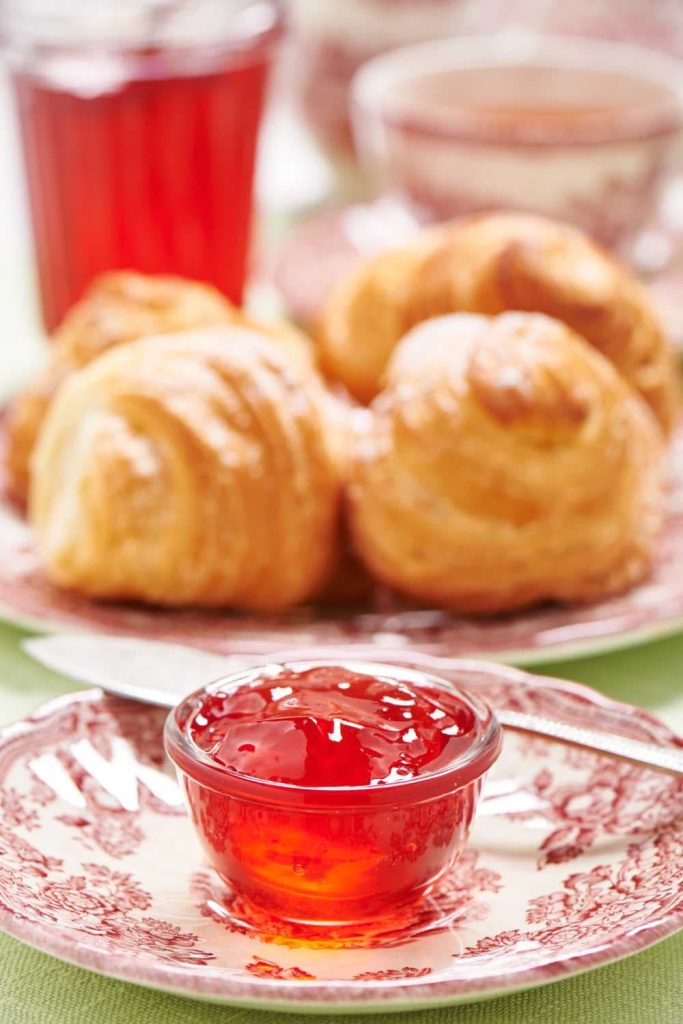
Gather These Fresh Ingredients for River Cottage Quince Jelly
Ingredients You’ll Need for This Recipe
For the Fruit Base
- 1.5 kg quinces, washed and roughly chopped (no need to peel)
- 1.5 liters of water
Quality note: Choose firm, fragrant quinces without deep bruising. Slight blemishes are fine, but avoid soft spots.
For the Jelly Setting
- Granulated sugar (measure according to extracted juice; usually 1 cup sugar per 1 cup juice)
- 2 tablespoons lemon juice (optional, enhances pectin and brightness)
No commercial pectin is required. Quinces are naturally high in pectin.
Detailed Step-by-Step Instructions to Make River Cottage Quince Jelly
Step 1: Prepare the Quinces
Wash the quinces thoroughly to remove any fuzz. Chop them into chunks, including cores and skins. These parts contain natural pectin, which helps the jelly set.
Do not peel them.
Step 2: Simmer Gently
Place chopped quinces into a large heavy-bottomed pot. Add water until just covered.
Bring to a boil, then reduce to a gentle simmer. Cook for 45–60 minutes until the fruit becomes soft and pinkish.
You’ll notice the color deepening as it cooks — that’s a good sign.
Step 3: Strain Without Pressing
Pour the cooked fruit into a jelly bag or a muslin-lined sieve set over a bowl.
Let it drip naturally for several hours or overnight. Do not press the fruit. Pressing can cloud the jelly.
Patience here creates clarity later.
Step 4: Measure and Add Sugar
Measure the extracted juice. For every cup (240 ml) of juice, add 1 cup of sugar.
Pour juice and sugar into a clean pot. Add lemon juice if using.
Step 5: Boil to Setting Point
Bring the mixture to a rolling boil. Stir until sugar dissolves, then boil rapidly for 8–12 minutes.
Test for setting by placing a small spoonful on a chilled plate. If it wrinkles when pushed, it’s ready.
If not, boil for a few more minutes and test again.
Step 6: Jar and Seal
Pour hot jelly into sterilized jars. Seal immediately.
As it cools, it will set into a firm, clear jelly with a beautiful amber glow.

Common Mistakes and How I Fixed Them
The first time I made quince jelly, I underestimated how precise preserving can be.
- I once pressed the fruit pulp – The jelly turned cloudy. Now I let gravity do the work.
- Boiled too long – It became overly firm. I now test earlier and more often.
- Added sugar before measuring juice – Ratios were off. Measuring ensures proper setting.
- Used under-ripe quinces – Flavor was weak. Fragrant fruit makes a difference.
- Skipped sterilizing jars – Shelf life reduced. Clean jars are essential.
What Pairs Perfectly with River Cottage Quince Jelly
- Sharp Cheddar Cheese – sweetness balances salty depth.
- Roast Lamb – fruity notes complement savory richness.
- Fresh Sourdough Bread – simple and satisfying.
- Pork Roast – enhances the natural sweetness of meat.
- Breakfast Toast – adds elegance to simple mornings.
Pro Tips for Making River Cottage Quince Jelly
- Choose fragrant fruit – Aroma indicates ripeness.
- Avoid stirring too much while boiling – Helps clarity.
- Skim foam gently – Keeps jelly clear.
- Test setting early – Prevents overcooking.
- Sterilize jars properly – Extends shelf life safely.
- Label with date – Track freshness.
- Store in cool place – Protects color and texture.
Inspiring Variations of River Cottage Quince Jelly
- Rosemary Infusion – Adds subtle herbal depth.
- Spiced Version – Include a cinnamon stick while simmering.
- Apple Blend – Combine quince with tart apples.
- Honey Swap – Replace part of the sugar with mild honey.
- Chili Twist – Add a small red chili for gentle heat.
- Orange Zest Addition – Brightens the overall flavor.
Each variation brings a slightly different personality while preserving the essence.
How to Store River Cottage Quince Jelly Properly
- Seal jars tightly – Prevent air exposure.
- Store in a dark cupboard – Light affects color.
- Refrigerate after opening – Keeps fresh for weeks.
- Check seal before use – Lid should not flex.
- Use a clean spoon – Prevent contamination.
Proper storage keeps flavor bright and texture firm.
Smart Reheating Tips for River Cottage Quince Jelly
Quince jelly does not require reheating. If slightly firm, allow it to sit at room temperature for easier spreading.
If using as a glaze, gently warm a few spoonfuls in a small pan over low heat until just loosened.
Avoid boiling again, as this may alter the texture.
Nutritional Value (Per Serving Approx.)
- Calories: ~50 kcal
- Protein: ~0 g
- Carbohydrates: ~13 g
- Fat: ~0 g
- Fiber: ~0 g
Try Other River Cottage Recipes
- River Cottage Green Tomato Chutney
- River Cottage Nut Roast
- River Cottage Smoked Mackerel Pâté
- River Cottage Simnel Cake
River Cottage Quince Jelly Recipe

River Cottage is known for seasonal British cooking and traditional preserving methods. Quince jelly fits beautifully into that philosophy.
Quince jelly is a clear fruit preserve made from the juice of cooked quince, sugar, and time. Unlike jam, it contains no fruit pulp. The result is smooth, glossy, and firm once set.
- Prep Time: 20
- Cook Time: 60
- Total Time: 1 hour 20 minutes
- Yield: 1 jar 1x
- Category: Preserve
- Method: Boiling
- Cuisine: British
Ingredients
For the Fruit Base
-
1.5 kg quinces, washed and roughly chopped (no need to peel)
-
1.5 liters water
Quality note: Choose firm, fragrant quinces without deep bruising. Slight blemishes are fine, but avoid soft spots.
For the Jelly Setting
-
Granulated sugar (measure according to extracted juice; usually 1 cup sugar per 1 cup juice)
-
2 tablespoons lemon juice (optional, enhances pectin and brightness)
Instructions
Wash the quinces thoroughly to remove any fuzz. Chop them into chunks, including cores and skins. These parts contain natural pectin, which helps the jelly set.
Do not peel them.
Place chopped quinces into a large heavy-bottomed pot. Add water until just covered.
Bring to a boil, then reduce to a gentle simmer. Cook for 45–60 minutes until the fruit becomes soft and pinkish.
You’ll notice the color deepening as it cooks — that’s a good sign.
Pour the cooked fruit into a jelly bag or a muslin-lined sieve set over a bowl.
Let it drip naturally for several hours or overnight. Do not press the fruit. Pressing can cloud the jelly.
Patience here creates clarity later.
Measure the extracted juice. For every cup (240 ml) of juice, add 1 cup of sugar.
Pour juice and sugar into a clean pot. Add lemon juice if using.
Bring the mixture to a rolling boil. Stir until sugar dissolves, then boil rapidly for 8–12 minutes.
Test for setting by placing a small spoonful on a chilled plate. If it wrinkles when pushed, it’s ready.
If not, boil for a few more minutes and test again.
Pour hot jelly into sterilized jars. Seal immediately.
As it cools, it will set into a firm, clear jelly with a beautiful amber glow.
FAQs
Why didn’t my quince jelly set properly?
Quince jelly usually fails to set if the sugar-to-juice ratio is incorrect or it hasn’t reached setting point. Always measure the extracted juice and add equal amounts of sugar (1 cup sugar per 1 cup juice). Boil rapidly and test using the cold plate method. If it still doesn’t set, return it to the heat and boil for a few more minutes before testing again.
Do I need to peel quinces before making jelly?
No, you should not peel quinces for jelly. The skins and cores contain high amounts of natural pectin, which helps the jelly set firmly. Simply wash the fruit well, remove any damaged spots, and chop it into chunks before simmering.
How long should I let the quince juice strain?
For clear quince jelly, allow the juice to strain naturally for at least 4–6 hours, or preferably overnight. Do not press or squeeze the fruit pulp, as this can make the jelly cloudy. Patience at this stage ensures a bright, transparent finish.
How do I know when quince jelly has reached the setting point?
Quince jelly reaches the setting point at about 104–105°C (220°F). If you do not have a thermometer, use the wrinkle test. Place a small spoonful on a chilled plate and let it sit for 30 seconds. Push it gently with your finger. If it wrinkles and holds shape, it is ready to jar.
Wrapping Up
The River Cottage Quince Jelly is a reminder that preserving is both science and art. With patience, careful measuring, and good fruit, you create something glowing and elegant.
It’s simple at heart — fruit, sugar, time — yet the result feels refined. Spread it on toast, serve it with cheese, or glaze roasted meats. However you use it, this jelly carries the quiet charm of traditional British preserving.