 Ekani Ella
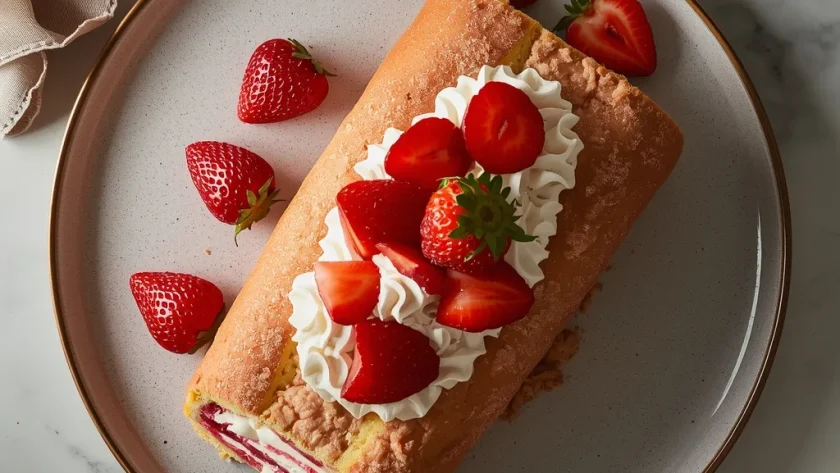
 There’s something wonderfully elegant about a Mary Berry Strawberry Roulade. It’s a dessert that looks impressive but relies on simple, fresh flavors: a light vanilla sponge, sweet berries, and billowy whipped cream. The total time, including cooling, is about 95 minutes, and while it’s not difficult, it does require a bit of confidence with a few key techniques.
I’d call this an intermediate recipe. The main trick is handling the sponge while it’s warm to prevent cracking. Don’t let that put you off—the steps are clear, and the result is a stunning, soft-textured dessert perfect for a summer tea or a special dinner.
What Is Mary Berry’s Strawberry Roulade?
A roulade is essentially a rolled cake, and this version is a classic of British baking. It differs from a heavier, butter-based Swiss roll because its sponge gets all its lift from whisked eggs. This creates a wonderfully light and flexible cake that’s ideal for rolling.
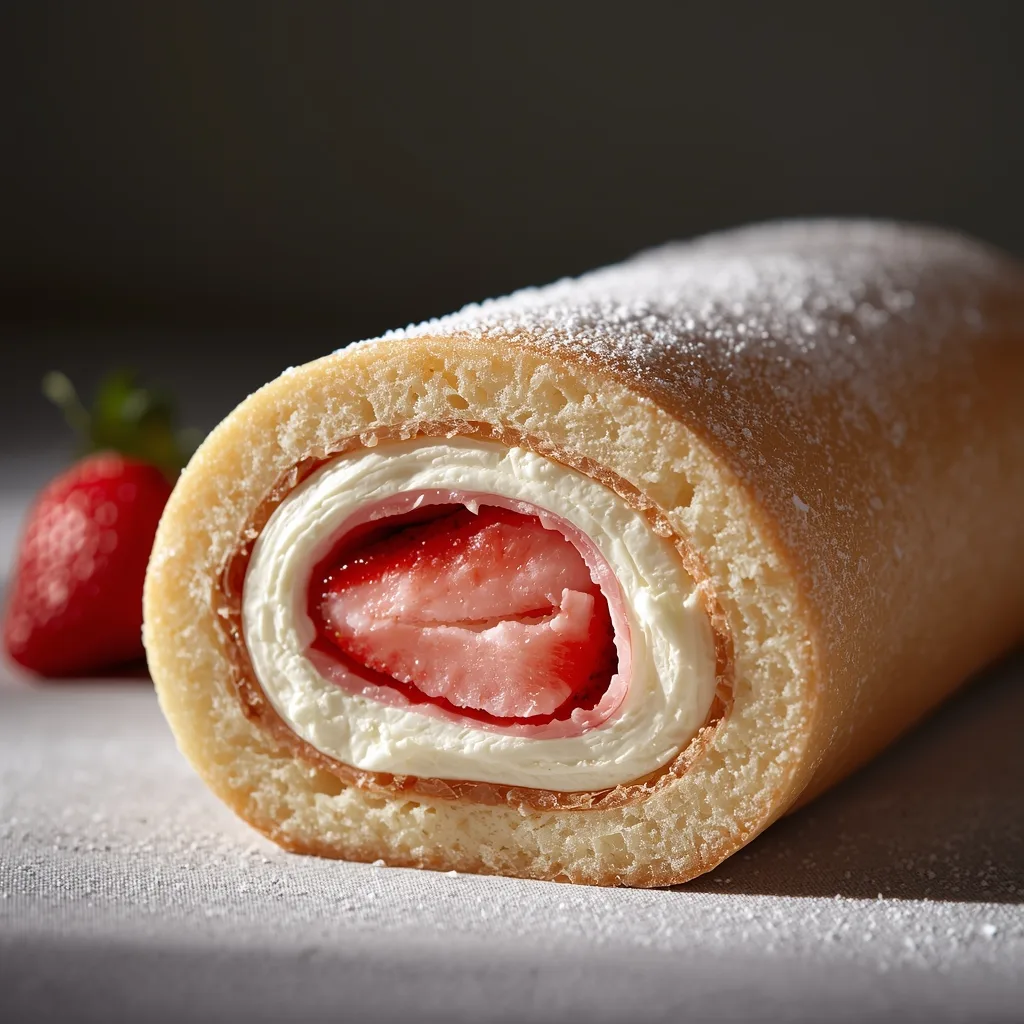
What I love most is the texture contrast. The delicate, almost foam-like sponge wraps around a fresh strawberry and cream filling. It’s a dessert that feels celebratory without being overly rich or complicated to make.
Gather These Fresh Ingredients for Mary Berry Strawberry Roulade
This recipe uses a short list of quality ingredients. Here’s what you’ll need, broken down by their role in the dessert.
For the Vanilla Sponge
- 4 large eggs, at room temperature — These are the star. Room temperature eggs whip to a much greater volume, which is the only leavening for the sponge. Cold eggs won’t achieve the same airy height.
- 1/2 cup (100g) granulated sugar — It stabilizes the whipped eggs and provides sweetness. Caster sugar is traditional, but regular granulated works perfectly.
- 1 teaspoon pure vanilla extract — Use a good quality extract for the best flavor in the simple sponge.
- 1/2 cup (60g) all-purpose flour, sifted — The small amount of flour provides just enough structure. Sifting is non-negotiable to keep the batter light.
- 1/4 teaspoon fine sea salt — A pinch balances the sweetness and enhances all the other flavors.
- Powdered sugar, for dusting — This is for rolling and finishing, preventing the warm sponge from sticking to the towel.
For the Strawberry Cream Filling
- 1 cup (240ml) heavy whipping cream, very cold — The high fat content is essential for a stable, pipeable filling that won’t weep. Chill your bowl and beaters, too.
- 2 tablespoons powdered sugar — It sweetens the cream smoothly without grittiness. You can adjust this to taste.
- 1 teaspoon pure vanilla extract — A second dose of vanilla in the filling ties everything together beautifully.
- 1 1/2 cups (225g) fresh strawberries, hulled and finely chopped — Fresh, ripe berries are key. Chop them small so they distribute evenly and make rolling easier.
- 1 tablespoon strawberry jam, for brushing — This little trick adds a layer of moisture and concentrated berry flavor to the sponge before you add the cream.
Detailed Step-by-Step Instructions to Make Mary Berry Strawberry Roulade
The process is a dance between speed and gentleness. Here’s how I walk through it to ensure success.
- Preheat and Prepare the Pan — Get your oven to 400°F / 200°C. Line your 10×15-inch jelly roll pan with parchment, letting it overhang the sides, and give it a light grease. An accurate, hot oven is crucial for the quick bake.
- Whisk the Eggs and Sugar to Ribbon Stage — In a stand mixer, whisk the room-temp eggs and granulated sugar on high for 5-7 minutes. It’s ready when it’s very pale, thick, and leaves a ribbon on the surface that holds for a few seconds. This is your foundation—don’t rush it.
- Fold in the Dry Ingredients — Whisk in the vanilla on low. Then, in three batches, use a spatula to gently fold in the sifted flour and salt. Use a figure-eight motion and stop the moment no dry flour remains. Overmixing here is the main cause of a flat sponge.
- Bake Until Just Set — Pour the batter into the pan, spread it evenly, and give the pan one tap on the counter. Bake for 8-10 minutes until the top is light gold and springs back when touched. It should feel set, not wet, but don’t let it brown.
- Roll the Warm Sponge — Have a towel dusted with powdered sugar ready. As soon as the cake is out, loosen its edges, invert it onto the towel, and peel off the parchment. Immediately, use the towel to roll it up from a short end, towel and all. This trains the sponge to curl.
- Cool Completely Rolled — Let the rolled log cool completely on a wire rack for at least 45 minutes. This sets its new shape and prevents cracking later.
- Make the Strawberry Cream — In a chilled bowl, whip the cold cream, powdered sugar, and vanilla to firm peaks. Gently fold in the chopped strawberries by hand until just combined.
- Unroll and Add Jam — Unroll the cooled sponge carefully—it will hold a curve. Lightly brush the entire surface with the strawberry jam using a pastry brush.
- Spread the Filling — Spread the strawberry cream evenly over the sponge, leaving a 1/2-inch border at the starting edge and a 1-inch border on the far long edge to contain the filling when you roll.
- Re-roll Tightly — Using the towel as a guide, re-roll the sponge tightly from the same short end, this time without the towel inside. Apply gentle, even pressure as you go.
- Finish and Garnish — Transfer the roulade to a platter, seam-side down. Trim the ends with a sharp knife for neatness. Dust the whole log generously with powdered sugar.
- Serve Fresh — Garnish with reserved whole strawberries. For the cleanest slices and to avoid a soggy sponge, serve within 1-2 hours using a serrated knife dipped in hot water.
Common Mistakes and How I Fixed Them
My first attempt at this dessert was a lesson in patience. I was too rough with the batter and ended up with a flat, cracked log. Here’s what I learned the hard way.
- Cold Eggs — Using eggs straight from the fridge was my first error. They simply won’t whip up to the necessary volume. Now I leave them out for a good hour before I start.
- Rushing the Ribbon Stage — I once stopped whisking after 3 minutes because it looked fluffy. The resulting sponge was dense. Whisk for the full 5-7 minutes until it’s truly thick and pale.
- Overmixing the Batter — Being vigorous when folding in the flour deflated all that precious air. A light hand and a few strategic folds are all you need.
- Letting the Sponge Cool Flat — I thought skipping the initial warm roll would save time. It didn’t—the cold sponge cracked irreparably. The warm roll is non-negotiable for flexibility.
- Overwhipping the Cream — Going past firm peaks into grainy, buttery territory makes the filling hard to spread and unpleasant. Stop as soon as it holds its shape on the whisk.
- Skipping the Jam Brush — I omitted this once, thinking it was fussy. The cream didn’t adhere as well, and the first slice was a mess. That thin sticky layer really helps.
What Pairs Perfectly with This Dessert
This light, fruity dessert shines with simple accompaniments. Here are a few of my favorite ways to serve it.
- A pot of Earl Grey tea — The bergamot notes in the tea complement the sweet strawberries and vanilla beautifully, making it a classic afternoon tea choice.
- A glass of Prosecco or Champagne — For a celebratory touch, the bubbles and acidity cut through the richness of the cream perfectly.
- A small scoop of vanilla bean ice cream — Serving a slice with a scoop on the side turns it into a more decadent, crowd-pleasing pudding.
- Fresh summer berries on the side — A small bowl of extra raspberries, blueberries, or more strawberries adds color and lets people customize their plate.
- A dollop of lemon curd — A small spoonful on the side introduces a lovely tangy contrast that brightens the whole dish.
Pro Tips for the Best Results
After making this countless times, I’ve picked up a few tricks that make the process smoother and the result even better.
- Measure your flour by weight — Using 60g of flour is more accurate than the cup measure and ensures you don’t accidentally add too much, which would make the sponge dry.
- Use an offset spatula for spreading — This tool gives you perfect control to spread the batter into the pan’s corners and to layer the filling evenly without tearing the sponge.
- Test for doneness with a light touch — The sponge is done when the center springs back immediately. If your finger leaves an indent, it needs another minute.
- Choose a lint-free tea towel — A smooth cotton towel is ideal. Avoid fluffy towels, as they will shed fibers onto your warm cake.
- Chill your mixing bowl for the cream — Pop your bowl and whisk attachments in the freezer for 15 minutes before whipping. Cold tools help the cream whip faster and more stably.
- Trim the ends after transferring — Don’t trim the messy ends on the towel. Move the whole roulade to its serving plate first, then trim for a pristine presentation.
- Slice with a hot, dry knife — Dipping a serrated knife in hot water and wiping it dry between cuts gives you beautifully clean slices without squashing the filling.
Inspiring Variations Worth Trying
Once you’ve mastered the classic, it’s fun to play with the flavors. These swaps keep the method identical but create a whole new dessert.
- Lemon and Blueberry — Add the zest of one lemon to the sponge batter. For the filling, fold in 1 cup of fresh blueberries instead of strawberries and use lemon curd instead of jam to brush the sponge.
- Chocolate Hazelnut — Replace 2 tablespoons of the flour with unsweetened cocoa powder. Fill with cream whipped with 2 tablespoons of Nutella and fold in 1/2 cup of chopped toasted hazelnuts.
- Raspberry and White Chocolate — Swap the strawberries for an equal amount of raspberries. Fold 1/2 cup of finely chopped white chocolate into the whipped cream before adding the fruit.
- Tropical Mango and Coconut — Use finely diced ripe mango in the filling. Add 1/4 cup of toasted coconut flakes to the cream and brush the sponge with a thin layer of mango puree.
- Autumn Spiced Apple — Fold 1 teaspoon of ground cinnamon into the flour. For the filling, use 1 cup of finely chopped, cooked apples (cooled completely) and a tablespoon of caramel sauce instead of jam.
How to Store It Properly
This is a dessert best enjoyed fresh, but if you have leftovers, here’s how to handle them.
- Short-term refrigeration — Cover the platter loosely with plastic wrap or transfer slices to an airtight container. It will keep in the fridge for up to 2 days, though the sponge will soften.
- Prevent condensation sogginess — If covering with plastic, let the roulade sit on the counter until the plastic is no longer steamy before putting it in the fridge.
- Store components separately — For make-ahead ease, bake and roll the sponge up to a day ahead. Keep it wrapped at room temperature. Whip the cream and chop the berries, storing them separately in the fridge, and assemble just before serving.
- Freezing is not recommended — The whipped cream filling does not freeze well. It becomes grainy and can separate upon thawing, ruining the texture of the whole dessert.
Smart Reheating Tips
Reheating isn’t really advised for this delicate dessert, but if you must, here’s the only method that comes close to working.
- Brief room temperature rest — Simply take the chilled slices out of the fridge and let them sit on the counter for 15-20 minutes before serving. This takes the chill off the cream and softens the sponge slightly.
- Avoid the microwave or oven — Applying direct heat will melt the cream filling completely and can make the sponge tough or rubbery. It’s not designed to be served warm.
FAQs
Can I make Mary Berry’s Strawberry Roulade ahead of time?
You can prepare the components ahead of time. Bake and roll the sponge in the towel a day in advance, keeping it wrapped at room temperature. Chop the strawberries and keep them chilled, and whip the cream a few hours before you plan to assemble. Put it all together just before serving for the best texture.
My sponge cracked when I rolled it. What went wrong?
The most common causes are overbaking the sponge (making it dry) or not rolling it while it was still warm and flexible. Next time, be strict with the 8-10 minute bake time and have your sugared towel ready to roll the instant it comes out of the oven.
Can I use frozen strawberries?
I don’t recommend it for the filling. Frozen berries release too much water when thawed, which will make your cream filling runny and can soak out the sponge. Stick to fresh, ripe strawberries for the best result.
How long does Mary Berry’s Strawberry Roulade last in the fridge?
Once assembled, it’s best eaten within 1-2 hours. If you must store it, covered leftovers will keep for up to 2 days, but expect the sponge to soften significantly from the moisture in the filling.
Can I use a different size pan?
The 10×15-inch jelly roll pan is ideal for getting the correct thickness. A larger pan will make the sponge too thin and likely to crack; a smaller pan will make it too thick and difficult to roll. It’s worth using the right tool for this recipe.
What can I use instead of heavy whipping cream?
For the proper texture, you need a high-fat dairy product that can whip. In the UK, double cream is a perfect substitute. There isn’t a good non-dairy alternative that will whip and hold its structure in the same way for this specific dessert.
Nutritional Value
Based on 1 serving (a generous slice, 1 of 4 total from the roulade).
- Calories: 385
- Protein: 8g
- Fat: 24g
- Carbohydrates: 36g
- Fiber: around 1g
- Sugar: 24g
- Sodium: 180mg
Try These Recipes
- Nigella Cream Cheese Frosting
- Paul Hollywood Custard Tart
- Jamie Oliver Egg Custard Tart
- Mary Berry Winter Vegetable Soup with Chestnuts
Wrapping Up
Mastering this dessert is a rewarding kitchen achievement. It teaches you about the importance of texture, timing, and a gentle touch. The final product—a beautiful, spiraled log dusted with sugar—always earns smiles.
I hope you feel confident to give this classic a try. Once you understand the rhythm of the warm roll and the light fold, making a Mary Berry Strawberry Roulade becomes a joyful and impressive baking project. Happy baking!
PrintMary Berry Strawberry Roulade

A light, elegant Swiss roll featuring a delicate vanilla sponge rolled with a luxurious strawberry and whipped cream filling. The sponge is baked until just set to remain flexible for rolling, resulting in a beautiful dessert with a soft texture and fresh berry flavor.
- Prep Time: 25
- Cook Time: 10
- Total Time: 95
- Yield: 4 1x
- Category: Dessert
- Method: Baking
- Cuisine: British
Ingredients
- For the Sponge:
- 4 large eggs, at room temperature
- 1/2 cup (100g) granulated sugar
- 1 teaspoon pure vanilla extract
- 1/2 cup (60g) all-purpose flour, sifted
- 1/4 teaspoon fine sea salt
- Powdered sugar, for dusting
- For the Filling:
- 1 cup (240ml) heavy whipping cream, very cold
- 2 tablespoons powdered sugar
- 1 teaspoon pure vanilla extract
- 1 1/2 cups (225g) fresh strawberries, hulled and finely chopped (reserve 4–5 whole berries for garnish)
- 1 tablespoon strawberry jam, for brushing
Instructions
- Preheat your oven to 400°F / 200°C. Line a 10×15-inch (25x38cm) jelly roll pan with parchment paper, ensuring the paper goes up the sides. Grease the parchment lightly with butter or baking spray. Accurate oven temperature is critical for a quick-set, flexible sponge that won’t crack when rolled.
- In the bowl of a stand mixer fitted with the whisk attachment, combine the room-temperature eggs and granulated sugar. Whisk on high speed for 5-7 minutes until the mixture is very pale, thick, and tripled in volume. When you lift the whisk, the ribbon of batter should hold its shape on the surface for a few seconds. This thorough aeration is what gives the sponge its lift without chemical leaveners.
- Reduce the mixer speed to low and whisk in the vanilla extract. In three additions, gently fold in the sifted flour and salt using a large rubber spatula. Use a figure-eight motion, cutting through the center and folding from the bottom, just until no dry streaks remain. Overmixing will deflate the batter and result in a dense, tough sponge.
- Pour the batter into the prepared pan, spreading it evenly into all corners with an offset spatula. Gently tap the pan on the counter once to release any large air bubbles. Bake immediately on the middle rack for 8-10 minutes. The sponge is done when the top is lightly golden and springs back immediately when gently pressed in the center. Do not overbake, or it will become dry and crack.
- While the sponge bakes, lay a clean, lint-free kitchen towel (larger than the pan) on your work surface. Dust it generously with powdered sugar. As soon as the sponge comes out of the oven, run a knife around the edges to loosen it. Invert it immediately onto the sugared towel. Carefully peel away the parchment paper.
- Starting from one of the shorter ends, use the towel to gently roll the warm sponge into a loose log, rolling the towel inside it. This initial roll, while warm, trains the sponge’s ‘muscle memory’ and prevents cracking when you later roll it with the filling. Let it cool completely in this rolled position on a wire rack for at least 45 minutes.
- Prepare the filling: In a chilled bowl, combine the cold heavy cream, 2 tablespoons of powdered sugar, and vanilla. Whip with a hand mixer or whisk until it forms firm, spreadable peaks. Be careful not to overwhip into butter. Gently fold in the finely chopped strawberries with a spatula until just combined.
- Unroll the completely cooled sponge carefully. It will be slightly curved. Using a pastry brush, lightly brush the surface with the strawberry jam. This thin layer adds flavor and moisture, helping the filling adhere.
- Spread the strawberry cream filling evenly over the sponge, leaving a 1/2-inch border along the starting edge and a 1-inch border on the opposite long edge to prevent spillage when rolling.
- Using the towel to guide you, re-roll the sponge tightly and evenly, this time without the towel inside. Apply gentle, even pressure as you roll forward. The initial seam should end up on the bottom.
- Carefully transfer the rolled roulade to a serving platter or board, seam-side down. Use a sharp knife to trim about 1/2-inch off each end for a neat presentation. Dust the entire roulade generously with powdered sugar.
- Garnish with the reserved whole strawberries, sliced or halved. For best texture and to prevent the sponge from becoming soggy, slice and serve within 1-2 hours of assembly. Use a serrated knife dipped in hot water and wiped dry for clean slices.
Notes
Storage: Store any leftovers, covered loosely with plastic wrap or in an airtight container, in the refrigerator for up to 2 days. The sponge will gradually soften from the moisture of the filling. Freezing: This roulade is best enjoyed fresh. Freezing is not recommended as the whipped cream filling does not freeze and thaw well, becoming grainy and potentially separating. For best results, assemble just before serving.
Nutrition
- Calories: 385
- Sugar: 24g
- Sodium: 180mg
- Unsaturated Fat: 14g
- Carbohydrates: 36g
- Fiber: 1g
- Protein: 8g
- Cholesterol: 195mg
Keywords: Mary Berry strawberry roulade, strawberry roulade recipe, Swiss roll, British dessert, summer dessert, strawberry cream roll, sponge cake, afternoon tea, party dessert, no-fail roulade, Mary Berry recipe, fresh strawberry dessert