 Ekani Ella
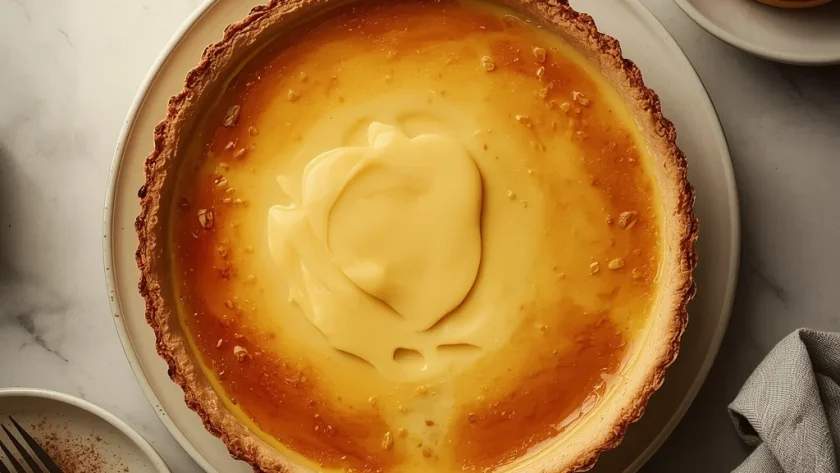
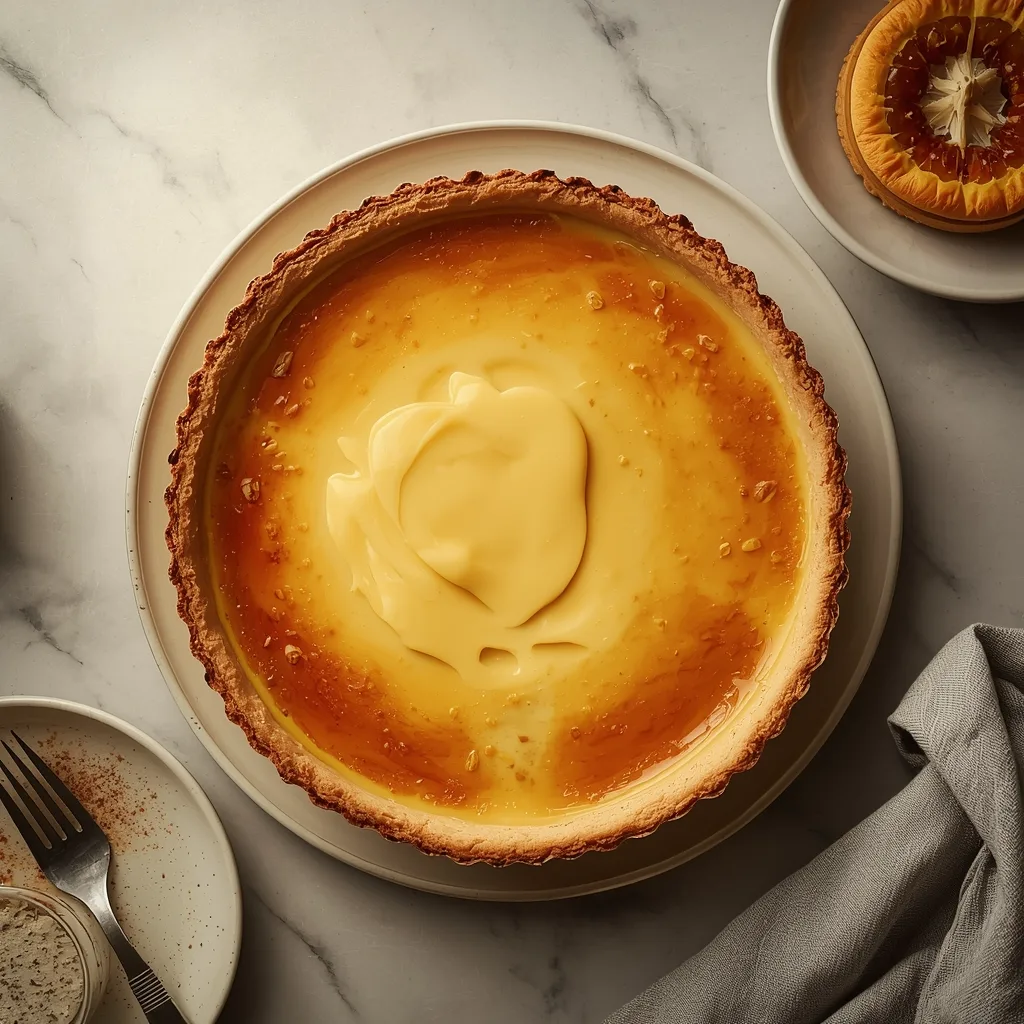
 I think a perfectly made Paul Hollywood Custard Tart is one of the most satisfying things you can pull from your oven. It’s a classic British dessert that balances a crisp, buttery pastry shell with a silky, barely-set custard, all perfumed with freshly grated nutmeg. The total time is just over an hour and a half, but the result feels timeless.
This recipe is intermediate. It’s not difficult, but it does ask for patience and a gentle touch, especially when handling the pastry and judging the custard’s wobble. If you follow the steps, you’ll be rewarded with a showstopper that’s perfect for a Sunday lunch, a special afternoon tea, or any occasion that calls for a bit of quiet elegance.
What Is Paul Hollywood Custard Tart?
At its heart, this is a celebration of simplicity and technique. It’s a descendant of the medieval custard tart, refined over centuries into the version we know today. What sets this particular recipe apart is its focus on a sweet shortcrust pastry and a baked custard that’s deliberately underbaked to achieve a supremely creamy texture.
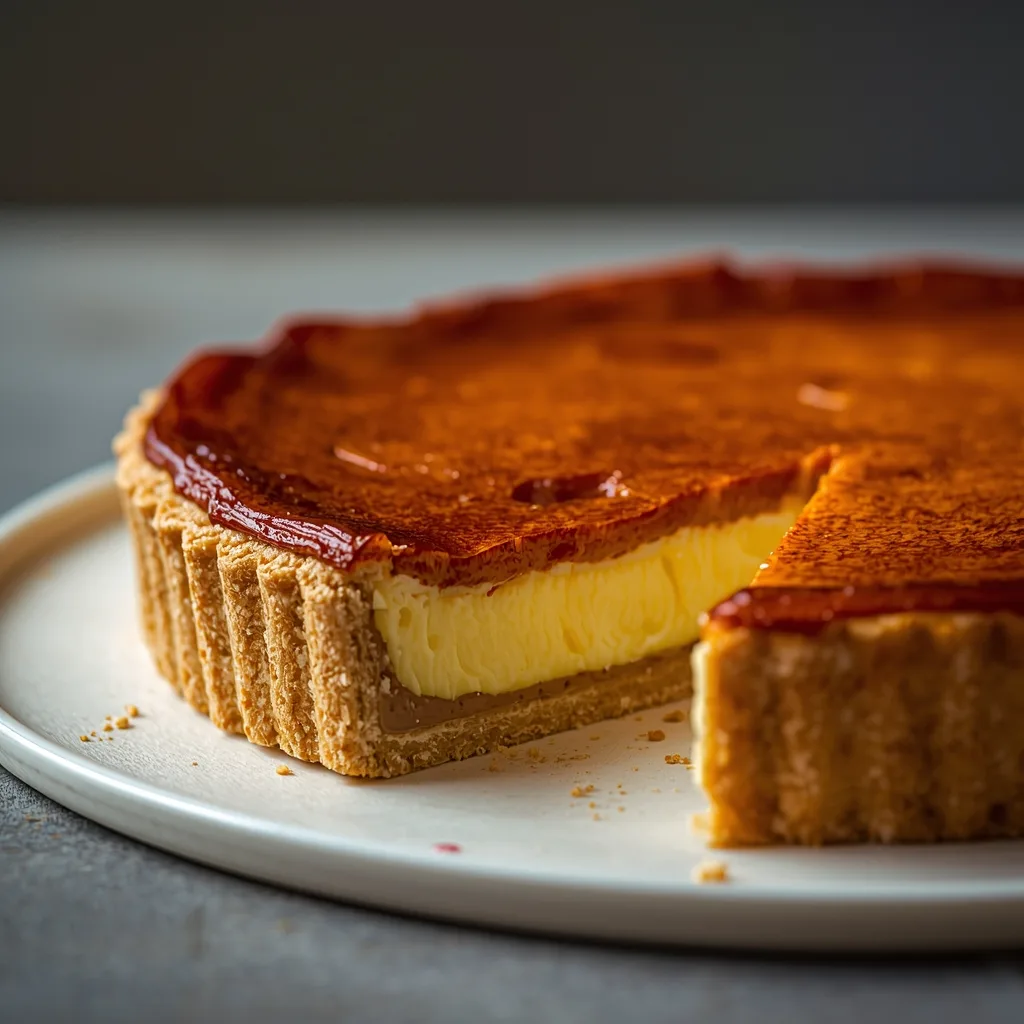
The magic is in the contrast. You get a shatteringly crisp shell giving way to a filling that’s smooth, rich, and delicately flavored. That final dusting of whole nutmeg isn’t just for looks; it provides a warm, aromatic note that cuts through the sweetness beautifully. It’s a staple of British baking that feels both comforting and sophisticated.
Gather These Fresh Ingredients for Paul Hollywood Custard Tart
You’ll notice this list isn’t long, but the quality of each component really shines through in the final bake. Here’s what you need, broken down by its role in the recipe.
For the Sweet Shortcrust Pastry
- All-purpose flour (1 1/4 cups / 150g) — This forms the structure of your pastry case. A good quality plain flour will give you a tender, crisp result.
- Granulated sugar (1/4 cup / 50g) — A little sugar in the pastry dough itself adds flavor and promotes a lovely golden color during baking.
- Unsalted butter, cold and cubed (1/2 cup / 113g) — The key to flakiness. Keeping it cold ensures it creates steam pockets as it melts in the oven.
- Large egg yolk (1) — This binds the dough and adds richness without making it tough, unlike a whole egg might.
- Ice-cold water (1-2 tbsp) — Used sparingly to bring the dough together without activating too much gluten.
- Fine sea salt (1/4 tsp) — Balances the sweetness and enhances all the other flavors in the pastry.
For the Custard Filling
- Whole milk (2 cups / 480ml) — The base of the custard. Whole milk provides the necessary fat and protein for a silky set.
- Heavy cream (1/2 cup / 120ml) — This enriches the custard, giving it a luxurious mouthfeel and helping it set to a perfect wobble.
- Vanilla bean (1, split and seeds scraped) — For the deepest flavor. If you don’t have a bean, 1 1/2 teaspoons of pure vanilla extract works perfectly.
- Large egg yolks (6) — These are the thickening agents. Their proteins set the custard gently, creating that signature smooth texture.
- Granulated sugar (1/2 cup / 100g) — Sweetens the custard. Whisking it with the yolks until pale helps create a stable, smooth mixture.
- Fine sea salt (1/4 tsp) — A pinch here is crucial. It prevents the custard from tasting flat or overly sweet.
- Freshly grated whole nutmeg — The non-negotiable finishing touch. Grating it fresh over the unbaked custard gives a far superior fragrance to pre-ground.
Detailed Step-by-Step Instructions to Make Paul Hollywood Custard Tart
The process is a dance between patience and precision. Here’s how I walk through it to ensure success.
- Make the pastry dough — In a large bowl, combine the flour, sugar, and salt. Add the cold, cubed butter. Using your fingertips, rub the butter into the flour until the mixture resembles fine breadcrumbs with a few pea-sized pieces remaining. This creates a flaky texture. Work quickly to prevent the butter from warming.
- Bind the dough — Make a well in the center and add the egg yolk and 1 tablespoon of ice-cold water. Use a fork to mix, drawing the flour in from the sides until a shaggy dough forms. If it seems dry, add the remaining water, 1 teaspoon at a time. Bring the dough together with your hands, but do not over-knead. Flatten into a disc, wrap tightly in plastic wrap, and chill for at least 30 minutes. This relaxes the gluten and firms the butter for easier rolling.
- Roll and line the tart tin — On a lightly floured surface, roll the chilled dough into a circle about 12 inches (30cm) in diameter and 1/8-inch (3mm) thick. Roll from the center outward, turning the dough a quarter turn after each roll to maintain an even circle. Carefully lift the pastry by draping it over your rolling pin and lower it into an 8-inch (20cm) fluted tart tin with a removable bottom.
- Fit and trim the pastry — Gently press the pastry into the corners and up the sides of the tin without stretching it, as this can cause shrinkage. Let the excess pastry overhang the rim. Roll your rolling pin over the top of the tin to cleanly trim the excess. Prick the base all over with a fork. Chill the lined tin in the freezer for 20 minutes. This prevents the pastry from slumping during blind baking.
- Preheat and prepare for blind baking — Preheat your oven to 375°F / 190°C. Line the chilled pastry shell with parchment paper and fill with baking beans or pie weights, ensuring they go right into the corners. Bake on the middle rack for 15 minutes. This sets the pastry structure.
- Finish blind baking — Carefully remove the parchment and beans. Return the empty pastry shell to the oven and bake for another 8-10 minutes, or until the base looks dry and is just beginning to turn a pale golden color. Remove from the oven and set aside. Reduce the oven temperature to 300°F / 150°C.
- Prepare the custard base — While the pastry bakes, combine the milk, cream, and the scraped vanilla bean seeds and pod (or vanilla extract) in a medium saucepan. Heat over medium heat until it just begins to steam and small bubbles form around the edges (scalding), but do not let it boil. Remove from heat, cover, and let infuse for 15 minutes to develop flavor.
- Temper the egg mixture — In a separate bowl, whisk the egg yolks, sugar, and salt together until pale, thick, and creamy, about 2-3 minutes. This ribbon stage helps create a smooth custard. Slowly pour the warm milk mixture into the egg yolk mixture in a thin, steady stream while whisking constantly. This gradual addition prevents the eggs from scrambling.
- Strain and fill — Strain the custard mixture through a fine-mesh sieve into a large jug to remove any cooked egg bits and the vanilla pod. This ensures a perfectly silky texture. Place the pre-baked tart shell on a baking sheet. Pour the strained custard into the shell, filling it almost to the top.
- Bake the custard — Grate a generous layer of fresh nutmeg over the entire surface of the custard. Carefully transfer the baking sheet to the preheated 300°F / 150°C oven. Bake for 35-40 minutes. The custard is done when the edges are set, but the center still has a slight, gentle wobble when you jiggle the pan. It will firm up as it cools.
- Cool completely — Remove the tart from the oven and let it cool completely in the tin on a wire rack. Do not attempt to remove it while warm, as the custard is too delicate. Cooling for at least 2-3 hours allows the custard to set fully and the flavors to develop.
- Serve — Once completely cool, carefully remove the outer ring of the tart tin. Use a sharp, thin-bladed knife to slice. Serve at room temperature or lightly chilled. The perfect slice will have a crisp pastry shell and a smooth, creamy, set custard.
Common Mistakes and How I Fixed Them
My first few attempts at this tart were learning experiences. I’ve made all the classic errors so you don’t have to. Here’s what went wrong and how I corrected it.
- Warm butter in the pastry — Rubbing the butter in with warm hands created a greasy, tough dough that shrank terribly. Now I work quickly, use cold utensils, and pop the bowl in the fridge for a few minutes if my kitchen is warm.
- Stretching the pastry into the tin — I used to pull the dough to fit the corners, which caused major shrinkage during baking. The fix is to gently lift and lower the dough, using spare pieces to patch any thin spots instead of tugging.
- Skipping the freezer chill before baking — I thought the fridge was enough. The pastry slumped. A solid 20 minutes in the freezer firms the butter completely and is the best insurance against a slumping case.
- Pouring hot milk too fast — In my haste, I once created sweet scrambled eggs. Now I pour in the thinnest stream imaginable while whisking like my life depends on it. Tempering is non-negotiable.
- Overbaking the custard — Waiting for the center to look “set” like a cake is a trap. It continues to cook as it cools. That gentle, jiggly wobble in the very center is your signal to take it out.
- Slicing while warm — Impatience led to a collapsed, messy slice. Letting it cool fully for several hours allows the proteins in the custard to set properly, giving you that clean cut.
What Pairs Perfectly with Paul Hollywood Custard Tart
This tart is elegant enough to stand alone, but a simple accompaniment can make it feel even more special. Here are a few of my favorite pairings.
- A pot of loose-leaf Earl Grey tea — The bergamot notes in the tea cut through the richness of the custard beautifully, making for a classic British afternoon.
- Fresh summer berries — A small handful of raspberries or strawberries on the side adds a welcome burst of freshness and a touch of acidity.
- Lightly whipped cream — It might seem like overkill, but a small dollop of barely-sweetened cream complements the texture without overwhelming it.
- A small glass of dessert wine — For a dinner party, a Sauternes or a late-harvest Riesling mirrors the honeyed, creamy notes of the tart.
- A simple coulis — A drizzle of raspberry or mango coulis on the plate adds color and a tangy contrast that elevates each bite.
Pro Tips for Making Paul Hollywood Custard Tart
These little insights, gathered from trial and error, will help you nail this recipe on the first try.
- Chill your tools — If your kitchen is warm, chill your mixing bowl and even your flour for 15 minutes before making the pastry. It makes a noticeable difference.
- Use a microplane for the nutmeg — This gives you the finest, most fragrant dusting that bakes into the custard perfectly, unlike coarser grates.
- Strain without skipping — Even if your mixture looks smooth, straining catches any tiny bits of cooked egg or vanilla pod, guaranteeing a flawless silky texture.
- Bake on a preheated sheet — Placing your filled tart tin on a baking sheet that’s already in the oven makes transferring it much safer and helps ensure even bottom heat.
- Trust the wobble test — Open the oven door at the 35-minute mark and gently jiggle the pan. If the center moves like a firm jelly, it’s done. It should not be liquid.
- Cool slowly — Let the tart cool in the turned-off oven with the door slightly ajar for 10 minutes before moving it to a rack. This prevents the custard from cracking from a sudden temperature change.
Inspiring Variations of Paul Hollywood Custard Tart
Once you’ve mastered the classic version, it’s fun to play with the flavors. Here are a few simple twists that work wonderfully.
- Citrus-infused custard — Add the zest of an orange or a lemon to the milk and cream as you heat it. Strain it out with the vanilla pod for a bright, fragrant twist.
- Cardamom and rose — Replace the nutmeg with a light dusting of ground cardamom before baking, and garnish the cooled tart with edible rose petals.
- Chocolate base layer — After blind baking, brush the base of the warm pastry shell with a thin layer of melted dark chocolate. Let it set before adding the custard for a hidden surprise.
- Maple and cinnamon — Swap half the granulated sugar in the custard for pure maple syrup, and use ground cinnamon instead of nutmeg for a cozy, autumnal flavor.
- Individual tartlets — Divide the pastry and custard among four 4-inch tartlet tins. Reduce the baking time for the custard to 20-25 minutes.
How to Store Paul Hollywood Custard Tart Properly
This dessert is truly best eaten the day it’s made, but with careful storage, you can enjoy it for a few days. Here’s how I keep it at its best.
- Refrigerate covered — Once completely cool, loosely cover the tart (still in its tin base) with foil or a dome lid. Store it in the fridge for up to 3 days.
- Protect the pastry — The crisp shell will inevitably soften in the fridge due to the moisture from the custard. There’s no way to prevent this entirely, but storing it uncovered will make it soggy much faster.
- Freeze the pastry disc only — The unbaked pastry disc can be wrapped tightly and frozen for up to 3 months. Thaw it overnight in the fridge before rolling.
- Avoid freezing the baked tart — Freezing the finished custard tart causes the delicate emulsion to break, resulting in a grainy, separated texture upon thawing. It’s not recommended.
Smart Reheating Tips for Paul Hollywood Custard Tart
Honestly, reheating is tricky and not generally advised, as it can easily overcook the delicate custard. If you must, here’s the gentlest approach.
- Serve at cool room temperature — Simply take the tart out of the fridge 30-60 minutes before you plan to serve it. This is the best way to enjoy the texture as intended.
- Avoid the microwave — The microwave will heat unevenly and is almost guaranteed to turn patches of the custard rubbery or cause it to weep.
- No oven reheating — Putting the whole tart back in the oven, even at a low temperature, will continue to cook the custard and likely over-set it, losing that perfect wobble.
FAQs
Can I use a store-bought pastry case?
You can, but the result won’t be the same. A homemade sweet shortcrust is far superior in flavor and texture. If you’re short on time, look for an all-butter pastry shell in the chilled section, not the pre-baked shelf-stable ones.
My custard cracked. What happened?
Cracking usually means it was baked at too high a temperature or for too long. The proteins in the eggs tighten and squeeze out moisture. Next time, double-check your oven temperature with a thermometer and trust the wobble test—it will continue to set as it cools.
Can I make Paul Hollywood Custard Tart the day before?
Absolutely. In fact, I often do. Bake and cool it completely, then store it covered in the fridge overnight. The flavors meld beautifully. Just remember the pastry will soften slightly.
What can I use instead of a vanilla bean?
Pure vanilla extract is a perfect substitute. Use 1 1/2 teaspoons and add it directly to the egg yolk and sugar mixture, skipping the infusion step. The flavor will still be lovely.
How long does Paul Hollywood Custard Tart last in the fridge?
It will keep, covered, for up to 3 days. The custard’s texture remains good, though the pastry shell will continue to soften each day. It’s always best within 48 hours.
Why is my pastry shell soggy on the bottom?
This typically happens if the blind baking step wasn’t thorough enough. Ensure you bake the empty shell until the base is dry and pale golden before adding the custard. A properly preheated oven is key.
Nutritional Value
Based on 1 serving = 1 slice out of 4 total.
- Calories: 645
- Protein: 12g
- Fat: 39g
- Carbohydrates: 62g
- Fiber: around 1g
- Sugar: 38g
- Sodium: roughly 320mg
Try These Recipes
- Jamie Oliver Egg Custard Tart
- Mary Berry Winter Vegetable Soup with Chestnuts
- Hairy Bikers Beef Biryani
- River Cottage Mint Jelly
Wrapping Up
Mastering this recipe is a rewarding project that teaches you so much about the fundamentals of baking. The contrast of textures and the deep, comforting flavor make every minute of effort worthwhile. I hope you give this classic Paul Hollywood Custard Tart a try in your own kitchen—it’s a dessert that never fails to impress and delight.
PrintPaul Hollywood Custard Tart
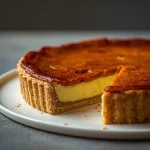
A classic British dessert featuring a crisp, buttery sweet shortcrust pastry shell filled with a silky-smooth, delicately flavored nutmeg custard. This tart bakes to a perfect, barely-set wobble with a golden-brown top.
- Prep Time: 45
- Cook Time: 55
- Total Time: 100
- Yield: 4 1x
- Category: Dessert
- Method: Baking
- Cuisine: British
Ingredients
- For the Sweet Shortcrust Pastry:
- 1 1/4 cups (150g) all-purpose flour, plus extra for dusting
- 1/4 cup (50g) granulated sugar
- 1/2 cup (113g) unsalted butter, cold and cubed
- 1 large egg yolk
- 1–2 tbsp ice-cold water
- 1/4 tsp fine sea salt
- For the Custard Filling:
- 2 cups (480ml) whole milk
- 1/2 cup (120ml) heavy cream
- 1 vanilla bean, split lengthwise and seeds scraped (or 1 1/2 tsp pure vanilla extract)
- 6 large egg yolks
- 1/2 cup (100g) granulated sugar
- 1/4 tsp fine sea salt
- Freshly grated whole nutmeg, for dusting
Instructions
- Make the pastry dough: In a large bowl, combine the flour, sugar, and salt. Add the cold, cubed butter. Using your fingertips, rub the butter into the flour until the mixture resembles fine breadcrumbs with a few pea-sized pieces remaining. This creates a flaky texture. Work quickly to prevent the butter from warming.
- Bind the dough: Make a well in the center and add the egg yolk and 1 tablespoon of ice-cold water. Use a fork to mix, drawing the flour in from the sides until a shaggy dough forms. If it seems dry, add the remaining water, 1 teaspoon at a time. Bring the dough together with your hands, but do not over-knead. Flatten into a disc, wrap tightly in plastic wrap, and chill for at least 30 minutes. This relaxes the gluten and firms the butter for easier rolling.
- Roll and line the tart tin: On a lightly floured surface, roll the chilled dough into a circle about 12 inches (30cm) in diameter and 1/8-inch (3mm) thick. Roll from the center outward, turning the dough a quarter turn after each roll to maintain an even circle. Carefully lift the pastry by draping it over your rolling pin and lower it into an 8-inch (20cm) fluted tart tin with a removable bottom.
- Fit and trim the pastry: Gently press the pastry into the corners and up the sides of the tin without stretching it, as this can cause shrinkage. Let the excess pastry overhang the rim. Roll your rolling pin over the top of the tin to cleanly trim the excess. Prick the base all over with a fork. Chill the lined tin in the freezer for 20 minutes. This prevents the pastry from slumping during blind baking.
- Preheat and prepare for blind baking: Preheat your oven to 375°F / 190°C. Line the chilled pastry shell with parchment paper and fill with baking beans or pie weights, ensuring they go right into the corners. Bake on the middle rack for 15 minutes. This sets the pastry structure.
- Finish blind baking: Carefully remove the parchment and beans. Return the empty pastry shell to the oven and bake for another 8-10 minutes, or until the base looks dry and is just beginning to turn a pale golden color. Remove from the oven and set aside. Reduce the oven temperature to 300°F / 150°C.
- Prepare the custard base: While the pastry bakes, combine the milk, cream, and the scraped vanilla bean seeds and pod (or vanilla extract) in a medium saucepan. Heat over medium heat until it just begins to steam and small bubbles form around the edges (scalding), but do not let it boil. Remove from heat, cover, and let infuse for 15 minutes to develop flavor.
- Temper the egg mixture: In a separate bowl, whisk the egg yolks, sugar, and salt together until pale, thick, and creamy, about 2-3 minutes. This ribbon stage helps create a smooth custard. Slowly pour the warm milk mixture into the egg yolk mixture in a thin, steady stream while whisking constantly. This gradual addition prevents the eggs from scrambling.
- Strain and fill: Strain the custard mixture through a fine-mesh sieve into a large jug to remove any cooked egg bits and the vanilla pod. This ensures a perfectly silky texture. Place the pre-baked tart shell on a baking sheet. Pour the strained custard into the shell, filling it almost to the top.
- Bake the custard: Grate a generous layer of fresh nutmeg over the entire surface of the custard. Carefully transfer the baking sheet to the preheated 300°F / 150°C oven. Bake for 35-40 minutes. The custard is done when the edges are set but the center still has a slight, gentle wobble when you jiggle the pan. It will firm up as it cools.
- Cool completely: Remove the tart from the oven and let it cool completely in the tin on a wire rack. Do not attempt to remove it while warm, as the custard is too delicate. Cooling for at least 2-3 hours allows the custard to set fully and the flavors to develop.
- Serve: Once completely cool, carefully remove the outer ring of the tart tin. Use a sharp, thin-bladed knife to slice. Serve at room temperature or lightly chilled. The perfect slice will have a crisp pastry shell and a smooth, creamy, set custard.
Notes
Storage: Store covered in the refrigerator for up to 3 days. The pastry will soften slightly over time. Freezing: This tart is best enjoyed fresh. The baked custard does not freeze well as it can become grainy. The unbaked pastry disc can be wrapped and frozen for up to 3 months; thaw overnight in the refrigerator before rolling. Reheating: Not recommended, as reheating can overcook the custard. Serve cool or at room temperature.
Nutrition
- Calories: 645
- Sugar: 38g
- Sodium: 320mg
- Unsaturated Fat: 22g
- Carbohydrates: 62g
- Fiber: 1g
- Protein: 12g
- Cholesterol: 395mg
Keywords: Paul Hollywood custard tart, British custard tart, English custard tart, nutmeg custard tart, sweet shortcrust pastry, baked custard dessert, afternoon tea dessert, classic British baking, silky custard filling, homemade custard tart